Why the sofa can't change between photos
AI-staged photos of one room often disagree because each is staged as a separate picture. What buyers see, why prompts don't fix it, and how to check a set.
On this page
AI-staged photos of one room often don't match because each photo is staged as a separate picture. The image model designs the room afresh every time, with no record of where it put the sofa and no measurement of the room, so a better prompt gets you a similar sofa, not the same one. Photos that disagree can't show a buyer how much space the room has, and that is what staging is for.
Key points
- Photos of one room staged one at a time are designed separately, so nothing carries the sofa's shape, size or place from one photo to the next.
- A detailed prompt repeated for every photo gives you similar sofas, not one sofa in one place.
- OpenAI says its image models "may occasionally struggle to maintain visual consistency for recurring characters or brand elements across multiple generations".
- A set whose furniture moves no longer agrees on how much space the room has.
- Consistent staging designs the room once, as one furnished 3D model, and renders that layout from each photo's camera, so every photo shows the same furniture in the same place.
What do buyers notice when staged photos don't match?
First the sofa that changes, then the quieter mismatches that make the room impossible to piece together.
Open a listing and watch how you use the photos. You don't study one image. You flick through the gallery and build the room in your head: the window is there, the door is behind you, the sofa faces the wall with the television. Each photo is a claim about the same room. When the claims disagree, there is no single room left to build, and a buyer has reason to wonder what else in the listing is not real.
A grey three-seater that becomes a beige corner sofa is easy to catch. These are harder to spot:
- A rug that reaches the wall in one photo and stops short of it in the next.
- A coffee table that moves closer to the window when the camera moves.
- A floor lamp that exists in only one photo.
- A bed against the left wall from the door, and against the far wall from the window.
- A dining table that fits comfortably from one angle and looks too big for the room from another.
In our view a buyer doesn't need to name the problem for it to do damage. It is enough that the room doesn't add up.
The cost goes beyond looks. Staging is there to help someone judge how a room could work: where the bed goes, whether a dining table fits beside the sofa. If the furniture moves between photos, the photos no longer agree on how much space there is, and the staging can't do that job.
Why does each AI-staged photo come out different?
Because the image model is usually given one photo at a time. A one-photo staging tool, or a general AI image app, takes a photo and a request and returns one plausible furnished version. Do that three times and you get three plausible rooms, each designed from scratch.
Nothing connects them. The model has no record of where it put the sofa last time, and no idea that the second photo shows the same wall from the other side, or how big the room is. OpenAI's image generation guide (opens in a new tab) lists this among its own models' limitations: they "may occasionally struggle to maintain visual consistency for recurring characters or brand elements across multiple generations". A sponsored post on Inman (opens in a new tab) (27 April 2026), promoting the staging tool Edensign, says of most AI staging tools: "They treat each photo in isolation, with no memory of layout or furniture placement."
Why doesn't a better prompt fix it?
Because words describe a kind of object, not one object in one place. Write "the same grey three-seater sofa under the window" for every photo and you get a grey three-seater under a window each time: different sofas, with different arms and proportions, in different places.
Showing the model the first staged photo helps with the look. For keeping a character the same across a book's illustrations, OpenAI's image prompting guide (opens in a new tab) suggests a "reusable character reference to help preserve appearance across scenes, poses, and pages". That is appearance. The model still has to guess from flat pictures where the sofa stands and how big it is. Our article on staging with ChatGPT or Gemini covers both approaches, and our guide to multi-angle virtual staging compares the three ways tools try to keep a room consistent, with a ten-minute test for any of them.
What does consistent staging need?
It has to treat the room as one object and the photos as views of it.
- Measure the room. Work out its shape and size from the photos, and where each camera stood, so that two views of one corner are known to be one corner. That needs photos that overlap: our guide to photographing an empty room for staging covers where to stand.
- Design once. One layout, decided in the room's own space. The sofa has one position, one size and one direction it faces.
- Show each photo the same design. The photo taken from behind the sofa has to show its back, at the right scale. A one-photo tool never has to get that right.
- Plan for the awkward angles. A piece that looks good in the main photo might block a doorway in another.
- Leave the room alone. Matching furniture is no use if the system quietly moves a window.
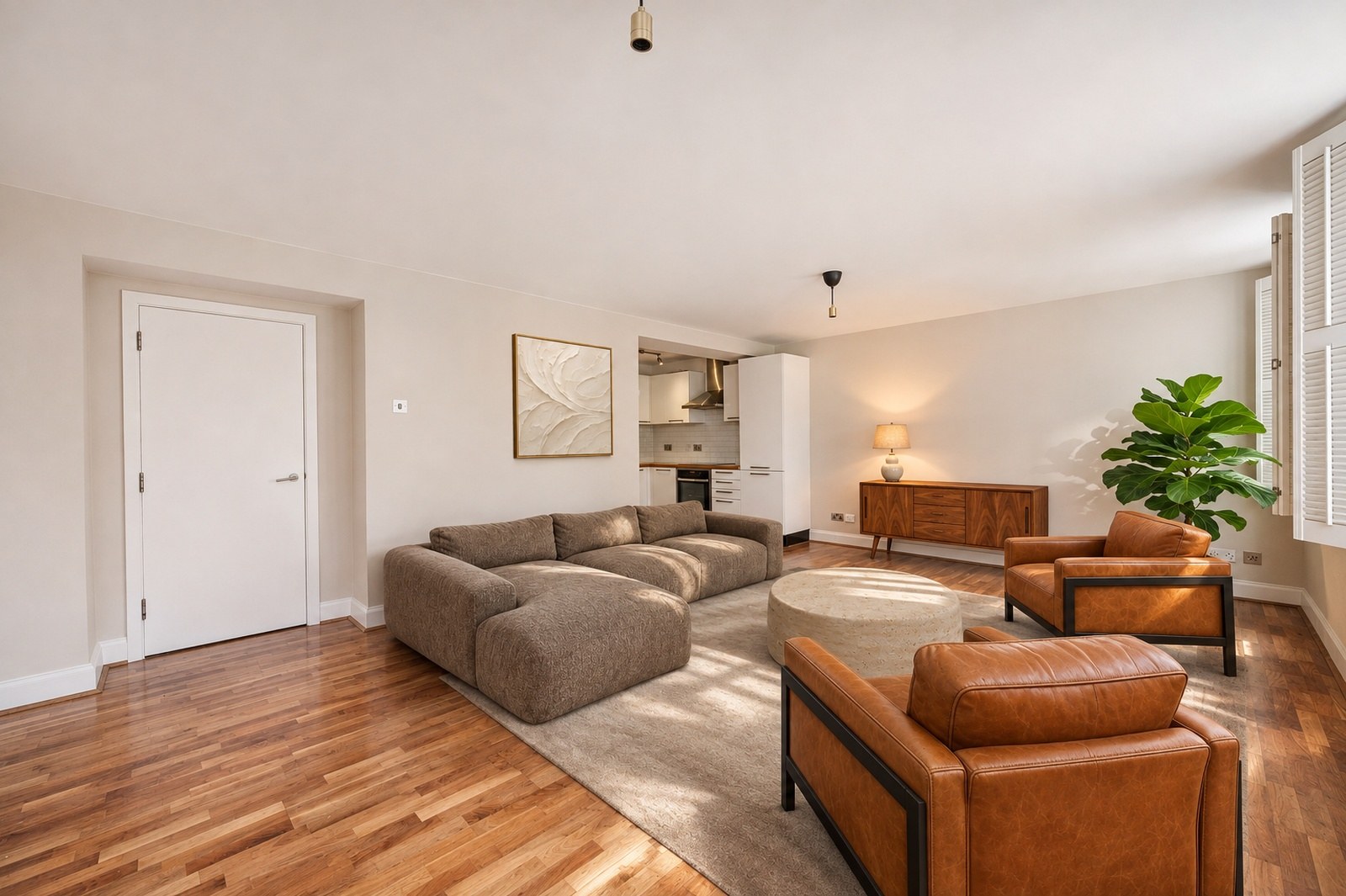
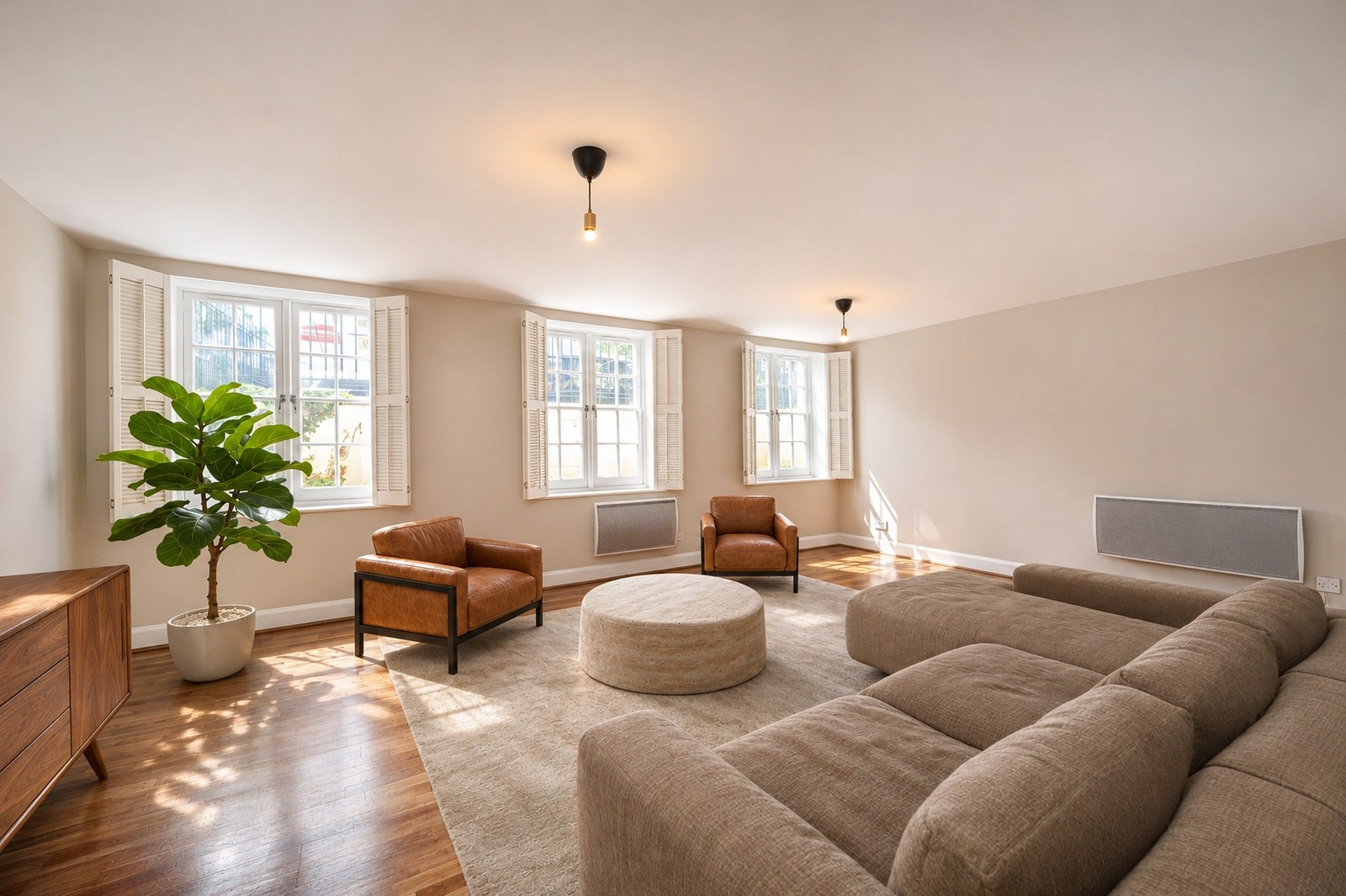
This is how Livium AI, which we make, is built. It builds one 3D model of the furnished room, each piece at its real size, and renders it from each photo's camera position, so every photo shows the same furniture in the same place. An AI image model then paints the final photos, and the app shows each one against its original in a drag-to-compare view.
How can you check a staged set before you publish it?
Follow the furniture through every photo and tie it to the building. Lay the staged photos side by side at full size, each next to its original, and run five checks.
| Check | How | It fails when |
|---|---|---|
| The biggest piece | Follow it through each photo | Its shape, colour or legs change |
| Every piece | Count them in each photo | Something seen from two angles is in only one |
| Position | Note where each piece sits against a window or door | It has moved relative to them |
| One layout | Sketch the room on paper from the photos | No single layout fits them all |
| The building | Compare each staged photo with its original | A wall, window, door, fitting or the floor has changed |
The sketch does on paper what a buyer tries to do in their head: if you can't draw one layout that fits every photo, nor can they. Photos can also agree with each other on a sofa that is too big, so judge each piece against the door beside it. Our list of virtual staging mistakes that make a listing look fake shows what each failure looks like.
If the set fails, don't publish all of it. Use the staged photo that passes, show the others as photographed, and label the staged one, as our AI disclosure policy explains. One honest image is better than three that disagree.
Common questions
Is there research on how buyers react to staged photos that don't match?
We found none. The sponsored Inman post says a buyer shown mismatched photos "can't explain it, but they swipe to the next listing", and cites what "researchers call an 'expectation gap'" without naming them. Treat that as a vendor's argument. Ours is reasoning you can test on yourself: look at three staged photos of one room that disagree, and try to say how big the room is.
Do photos of different rooms need the same furniture?
No. Consistency is about one room. A living room and a bedroom in matching colours are coherent, which is pleasant but optional. The exception is furniture seen through a doorway: if the living room sofa shows in the hallway photo, it has to be the same sofa.
Does a small change, like a cushion, matter?
Less than a sofa that changes, but a buyer comparing photos can spot it. A fair test is whether you would happily explain the difference at a viewing. A cushion in a slightly different shade probably passes. A lamp in one photo only, or a rug that changes size, does not, because it changes what the room seems to hold.
Trying it on your own room
Livium AI stages living rooms and bedrooms from up to six ordinary photos of one room, all from one 3D model of the furnished room, so the sofa is the same sofa in the same place in every photo. Every original is kept next to its staged photo. Each new person with a confirmed email address gets 25 free credits: enough for five photos, watermarked, no card. Start free and follow the sofa through every photo yourself.
Stage the room once.
Every photo matches.
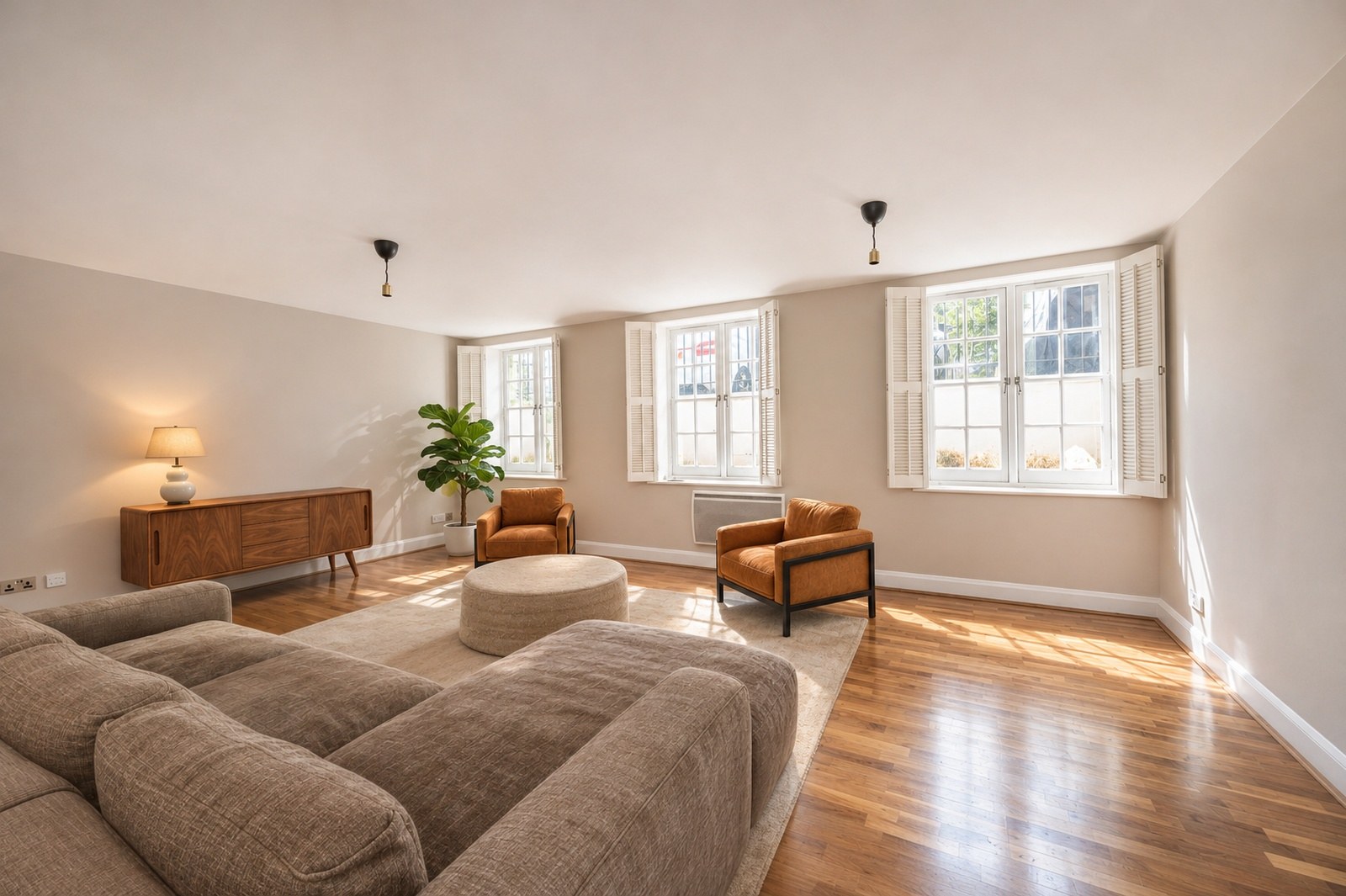
Upload a few photos of the empty room. Livium AI furnishes it once, in one 3D model with every piece at its real size, so every photo of the listing shows the same furniture in the same place.
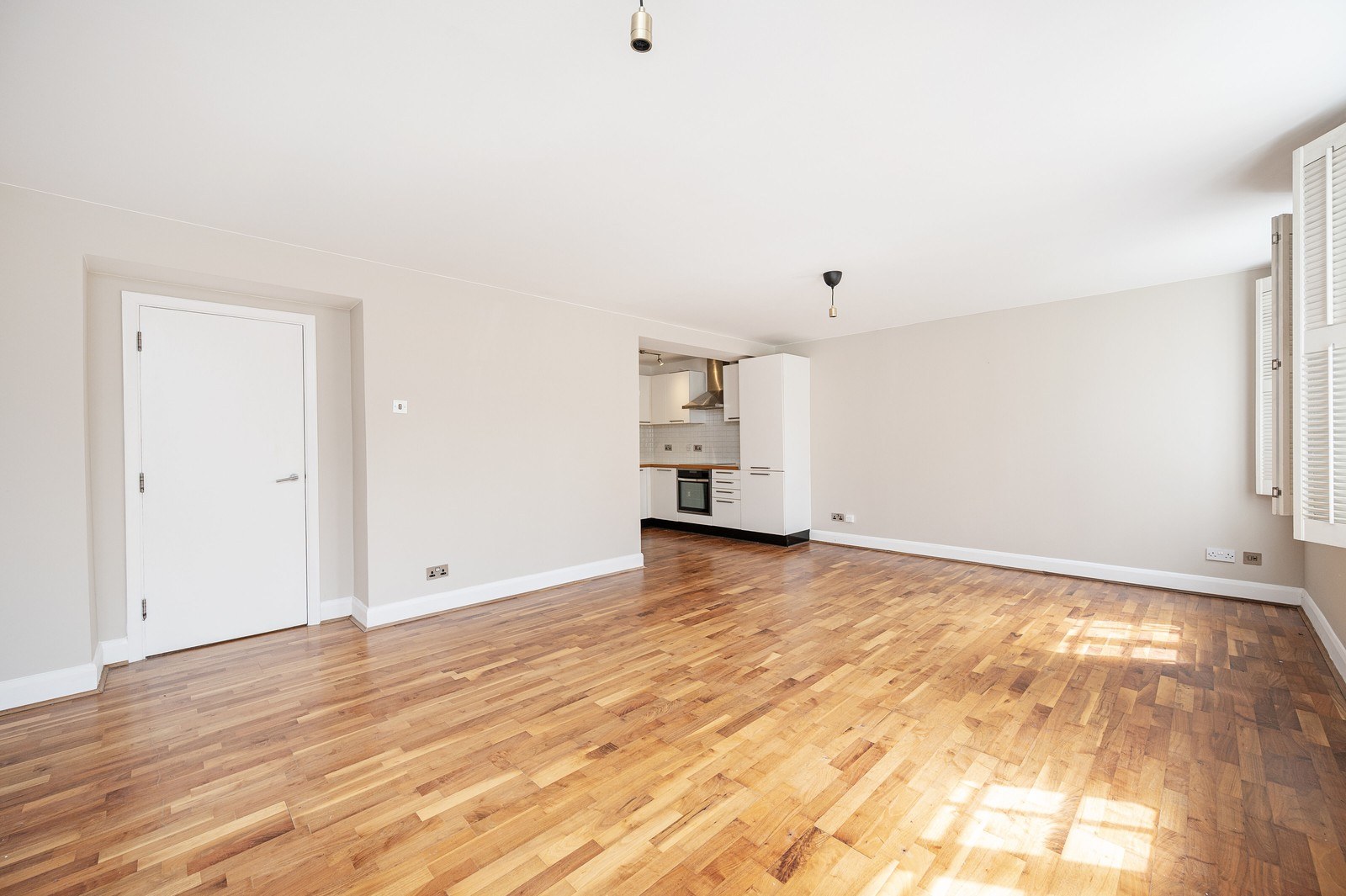 As photographedStaged by Livium AI
Sources
All links last checked on 16 November 2026.
- OpenAI, Image generation guide: Limitations (opens in a new tab), OpenAI API documentation, undated.
- OpenAI, Image prompting: Keep a character consistent (opens in a new tab), OpenAI Cookbook, undated.
- Inman, Why your AI-staged listing photos don't match, and how multi-angle AI staging fixes it (opens in a new tab), Inman Content Studio, sponsored post promoting Edensign, 27 April 2026.
- Livium AI, AI and virtual staging disclosure policy, sections 4 and 5.
Keep reading
Can ChatGPT do virtual staging? What works, what doesn't
ChatGPT and Gemini can stage one listing photo well. Where they slip on a room's other photos, furniture size and the building, and what to check first.
9 virtual staging mistakes that make a listing look fake
The staging mistakes that matter are not about taste: furniture that changes, wrong sizes and an altered building. How to catch all nine, with a checklist.
Multi-angle virtual staging: one room, every photo
Multi-angle virtual staging shows the same furniture in the same place in every photo of a room. How tools try to do it, and a ten-minute test for any tool.