Removing furniture from listing photos: an honest guide
You can remove furniture from listing photos with AI, often the only way to show a lived-in flat clear. What to clear first, what to check and what to disclose.
On this page
You can remove furniture from real estate photos with an AI image model, and for a tenanted or lived-in flat it is often the only practical way to show a room clear. The model paints in the floor, skirting and wall where the furniture stood, so treat removal like staging: say it was done, keep the original, and never let it hide damage.
Key points
- When an AI tool removes furniture, it paints in the floor, walls and skirting the furniture hid, which is why removal is disclosed like staging.
- Anything that can be carried out before the shoot should be, because then the floor in the photo is the real one.
- Removing a tenant's sofa is presentation. Removing a stain, a crack or a fixed fitting misrepresents the property.
- California's law for agents advertising a sale covers images altered "to add, remove, or change elements", furniture included. CRMLS, a Californian listing service, counts virtually clearing a room of furniture as digitally altered.
- We found no published rule in Dubai, or from Bayut, Property Finder or Dubizzle, on removing furniture from photos or labelling edited ones. We would still disclose: "Existing furniture has been digitally removed from this image."
Can you remove furniture from a listing photo?
Yes. Staging tools offer it, and general AI image apps will do it if asked. What matters is the part of the photo where the furniture stood.
The model does not lift the sofa off the floor. It paints in what the room would look like without the sofa: the boards or tiles underneath, the skirting, the bottom of the wall. Floors and skirting repeat, so on an ordinary room the result usually looks right. Where the hidden part was not ordinary, such as a socket or a patch of damp, look at the other photos of the room: one of them often shows that wall in plain view.
What should you tidy before the shoot?
Everything you can carry out. Bayut's guide to listing photos (opens in a new tab) (updated 21 October 2026) says to "Always take pictures of a property at its cleanest", and that "it's better to remove the extras and retake the photos rather than use imperfect ones".
With a tenant in place, agree a time in writing and send them this list a few days before. Much of it protects their privacy.
- Surfaces. Worktops, bathroom shelves, bedside tables and the floor. One or two objects on a surface at most.
- Anything with a name on it. Family photographs, certificates, children's drawings, name plates on bedroom doors, school bags.
- Documents and screens. Post, bills and contracts go in a drawer. Laptops and televisions go off.
- Valuables and medicines. Out of sight.
- People and pets. Out of the frame, including mirrors and glass doors. Property Finder's checklist for Verified listings (opens in a new tab) (its badge for listings checked against the owner's documents) asks that "All images exclude people".
- Light. Curtains open, every light on, beds made.
What cannot leave the room on the day, such as a sofa, a bed or a free-standing wardrobe, is what digital removal is for.
How much should you remove?
As little as the photo needs. The more you remove, the more plainly you should say so.
| Level | What goes | What is painted in | What to tell people |
|---|---|---|---|
| Tidy before the shoot | Clutter, carried out | Nothing | Nothing |
| Remove clutter digitally | Papers, cables, toiletries, pictures | Small patches behind each item | Rules differ. We would say the photo was edited |
| Remove the furniture digitally | Sofas, beds, tables, rugs | All the floor, wall and skirting the furniture hid | "Existing furniture has been digitally removed from this image." |
When all the furniture goes, do not call it decluttering. Say the furniture was removed.
What can go wrong when furniture is removed?
General AI image tools can repaint more than you asked for. OpenAI's image generation guide (opens in a new tab) says that when its GPT Image models edit a marked area, "The model uses the mask as guidance, but may not follow its exact shape with complete precision." Look for these:
- A floor that does not join up. Boards that change width where the sofa stood, grout lines that stop lining up, carpet that changes colour.
- Hidden fittings. A socket, valve, vent or grille the furniture covered is left out or drawn in, or a half-hidden one is completed in a different shape.
- Shadows left behind. A dark patch where the piece stood, with nothing left to cast it.
- Reflections. A mirror, glass door or polished floor that still shows the sofa.
- Changes elsewhere. A view, a finish or a fitting elsewhere in the frame that no longer matches the original.
- A room with no scale. Bayut's guide notes that "Furniture and fixtures usually aid viewers in estimating the space available in the property." Without them, a room on a wide lens can read bigger or smaller than it is.
Put the original and the edited photo side by side at the same size and check the cleared area first, then the rest of the frame. Livium AI is designed to keep the room as photographed, and its app shows each photo against its original in a drag-to-compare view for this check.
When does removing furniture become misleading?
When it takes away something a buyer or tenant would want to know about. The tenant's sofa leaves with the tenant, so removing it is presentation. The stain on the wall behind it stays with the flat, so removing that misrepresents the property.
NorthstarMLS, a US multiple listing service (MLS, the shared database agents in one region use to list homes), draws the line in the same place. Its proposed guidelines of 10 July 2026 (opens in a new tab) permit staging "only to add or remove personal property such as furniture and décor" and prohibit "Alterations that change or hide permanent or structural elements of the property". The New South Wales government's advertising guidelines for agents (opens in a new tab) say agents must not "change the appearance of a property by digitally removing or adding features". They do not mention furniture.
Never remove:
- damp, mould, stains, cracks, holes or damaged flooring
- a boxed-in pipe, a water heater or an air-conditioning unit
- sockets, switches, radiators, vents and grilles
- anything in the view, such as a building site
- furniture that is included in the sale or the let
Every mark in the original should still be there in the edited photo. Our article on what you may edit in a listing photo covers edits other than removal.
Do you have to disclose furniture removal?
Where we found rules that deal with it, mostly yes. In Dubai we found none either way. We would disclose it everywhere: it costs one sentence, and the original is your evidence if anyone asks.
California. Section 10140.8 of the Business and Professions Code (Assembly Bill 723), in force since 1 January 2026, applies to licensed agents advertising a sale. It defines a digitally altered image (opens in a new tab) as one changed "to add, remove, or change elements in the image", naming furniture. The advert needs a statement "reasonably conspicuous and located on or adjacent to the image", with a link or QR code to the original.
US listing services. The guidance of CRMLS (opens in a new tab), the California Regional MLS (updated 20 October 2026), says: "Virtually clearing a room of furniture that will not be included at closing as part of the listed price is also considered digitally altered." The original "with the furnishings" goes next to the edited photo. Metro MLS in Wisconsin is less strict about small edits. Its photo rules of 21 April 2026 (opens in a new tab) say a photo where you "decluttered a room or removed photos off the wall" need not be marked, because "you are not changing the true and current condition of the physical house". They count virtual staging as altered but do not say whether clearing a whole room is.
Dubai. We found no published rule in Dubai, and none from Bayut, Property Finder or Dubizzle, on removing furniture from photos or labelling edited ones. Property Finder's Verified checklist asks that "All images are genuine images of the property" without saying whether a cleared photo counts. For Bayut's TruCheck badge the agent photographs the property on site, and Bayut's agent guide to TruCheck (opens in a new tab) (28 October 2024) says a villa's photo "needs to be similar to the photographs uploaded with the listing". A villa furnished at the check and cleared in the listing may not look similar. We do not know how Bayut treats that.
What to write. For a photo where furniture was only removed, our AI disclosure policy suggests: "Existing furniture has been digitally removed from this image." Put it in the caption or description, in the language of the listing. If the room was cleared and then staged, use the staging sentence: "This image has been virtually staged: the furniture and decor were added digitally and are not included with the property." Our article on disclaimer wording has more, and our guide to the disclosure rules goes place by place.
Should you leave a cleared room empty or restage it?
Restage when the room is hard to read without furniture. Leave it empty when the buyer will furnish it and wants to see the space.
If condition is the question, publish the original beside the cleared photo. Restaging gives the buyer something to judge size by, as long as the new furniture is the right size and, across several photos of one room, the same pieces in the same place. Livium AI restages with catalogue pieces that are 3D models at their real size, placed once in a 3D model of the room, so every photo shows the same pieces in the same place. Our guide to multi-angle virtual staging explains the method, and how to test any tool.
What does furniture removal look like on a real room?
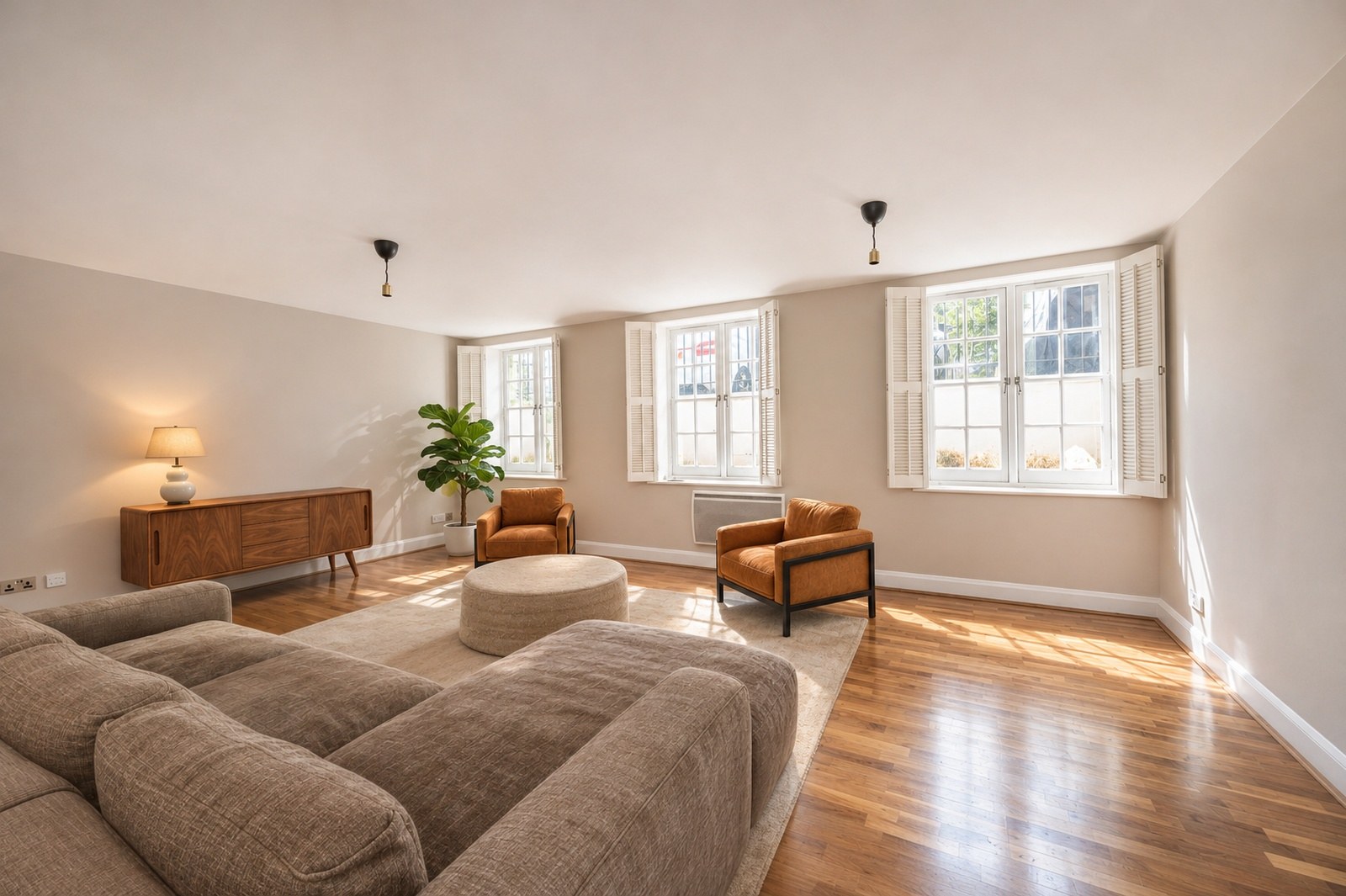
Here are two of our own sets: furnished rooms cleared digitally and staged again with Livium AI.
A living room staged as a bedroom
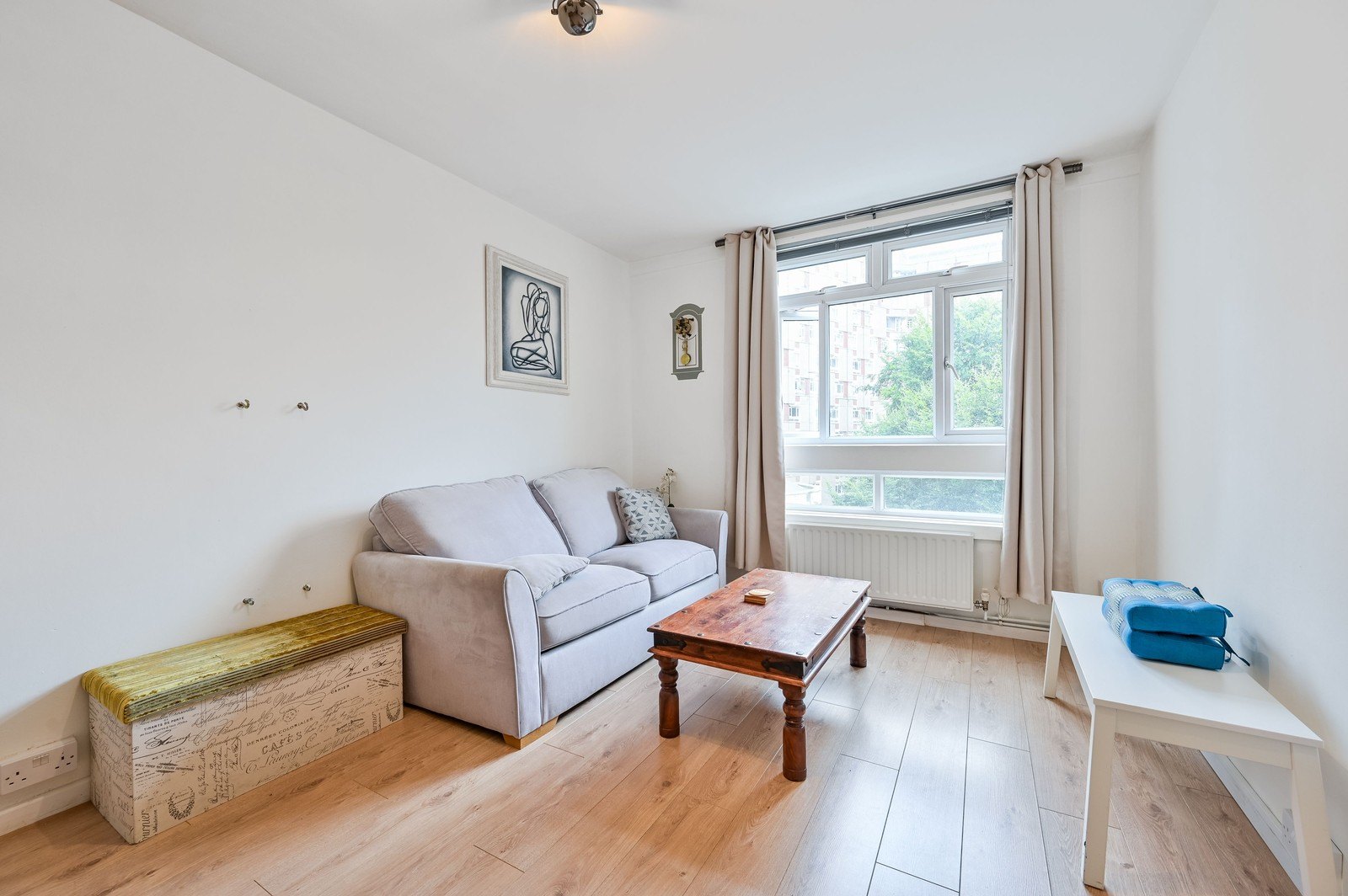
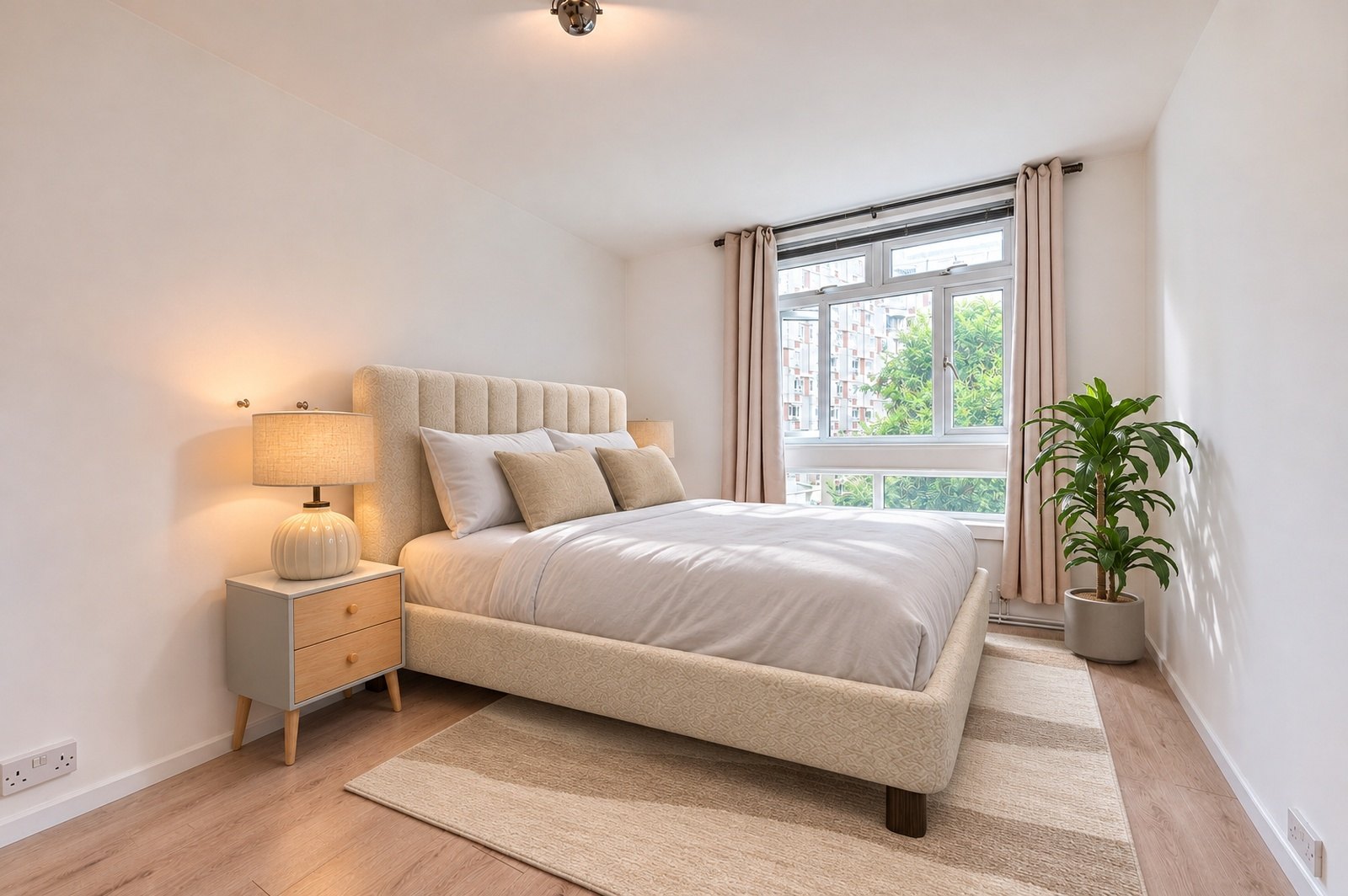
The owner's sofa, benches, coffee table and wall decorations are gone, and the room now reads as a bedroom: an upholstered bed with its head against the left-hand wall, a bedside table with a lamp, a striped rug and a tall plant by the window. It shows a buyer one way to use the room.
A bedroom with a terrace
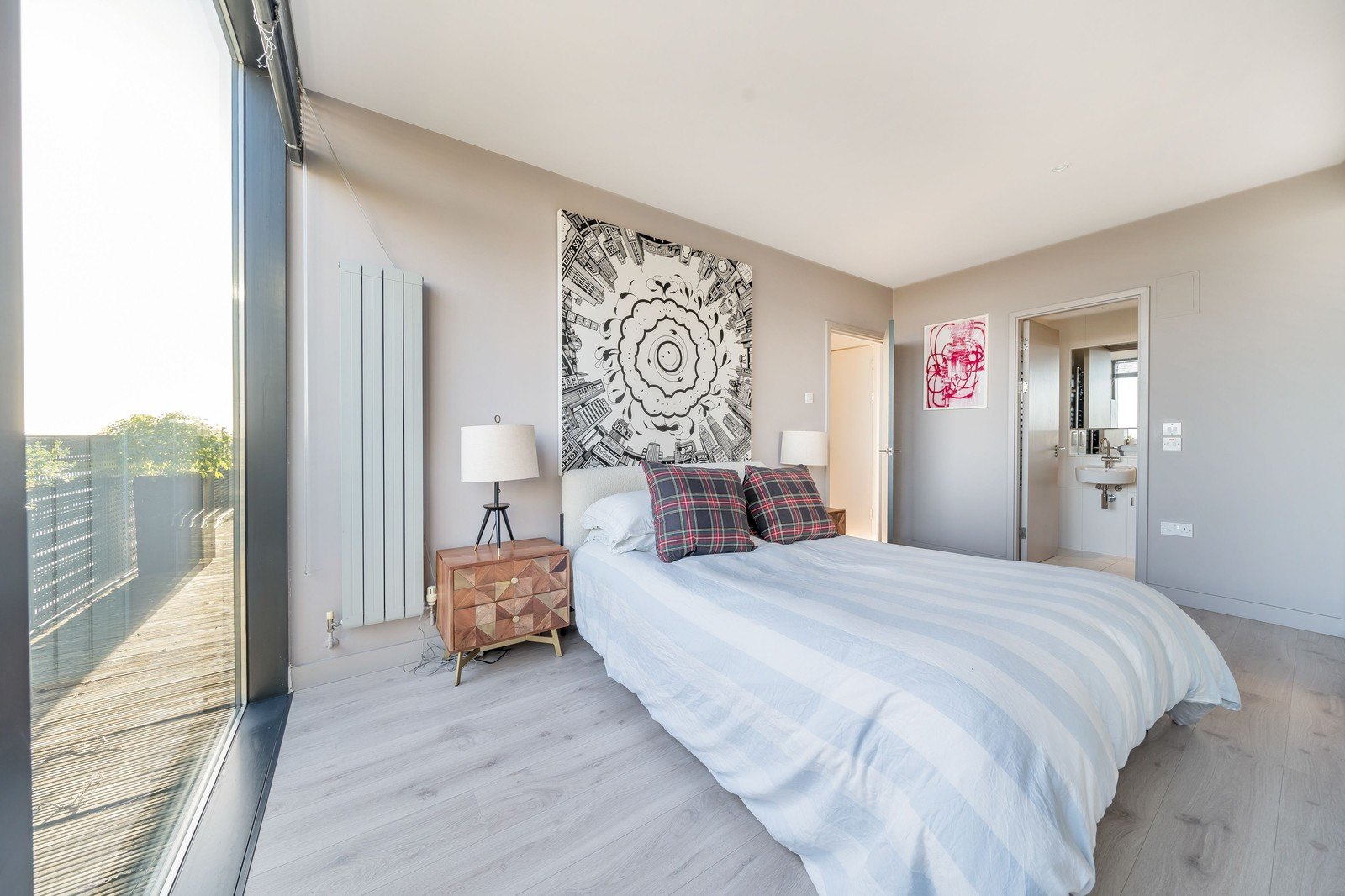
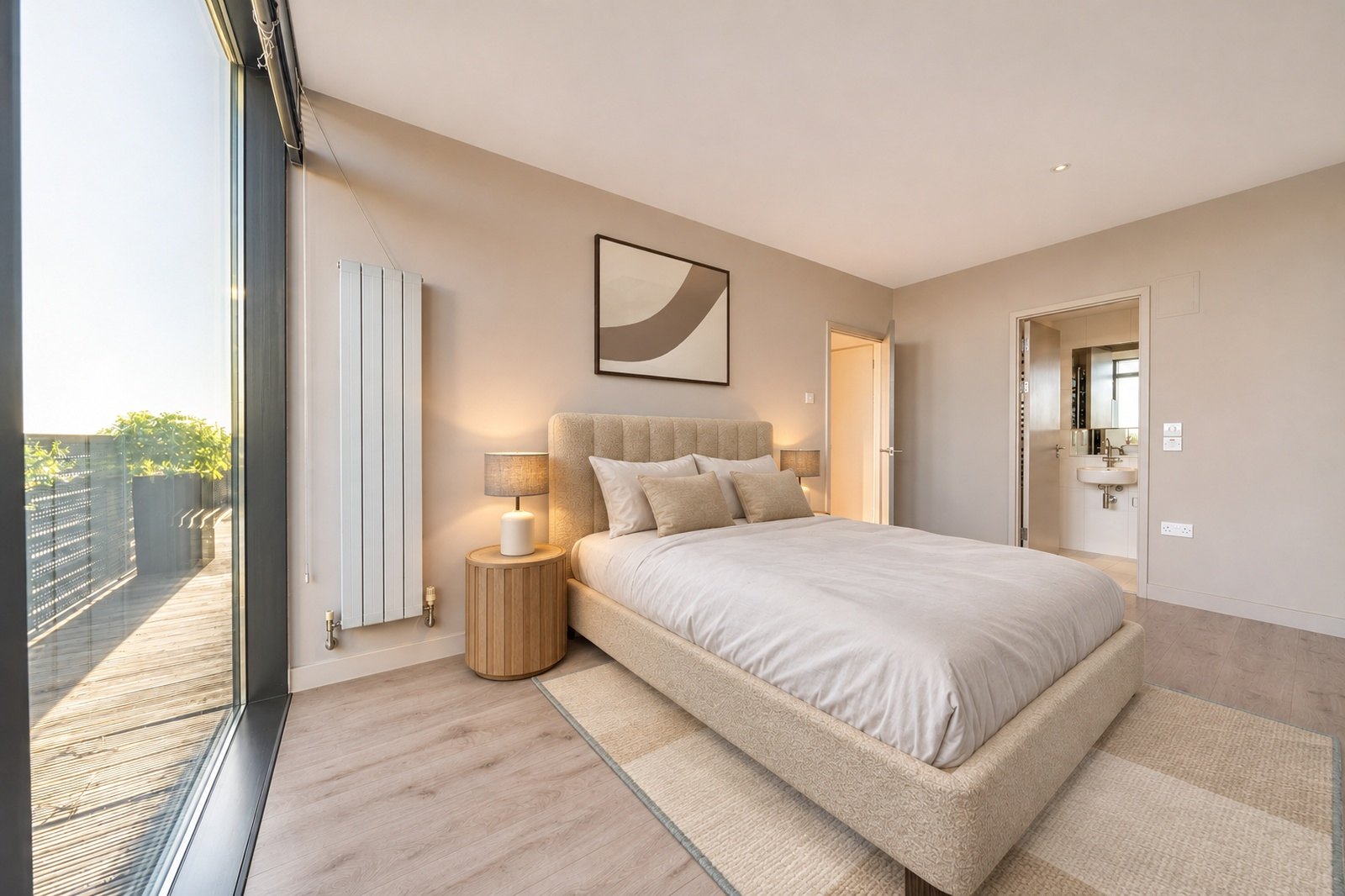
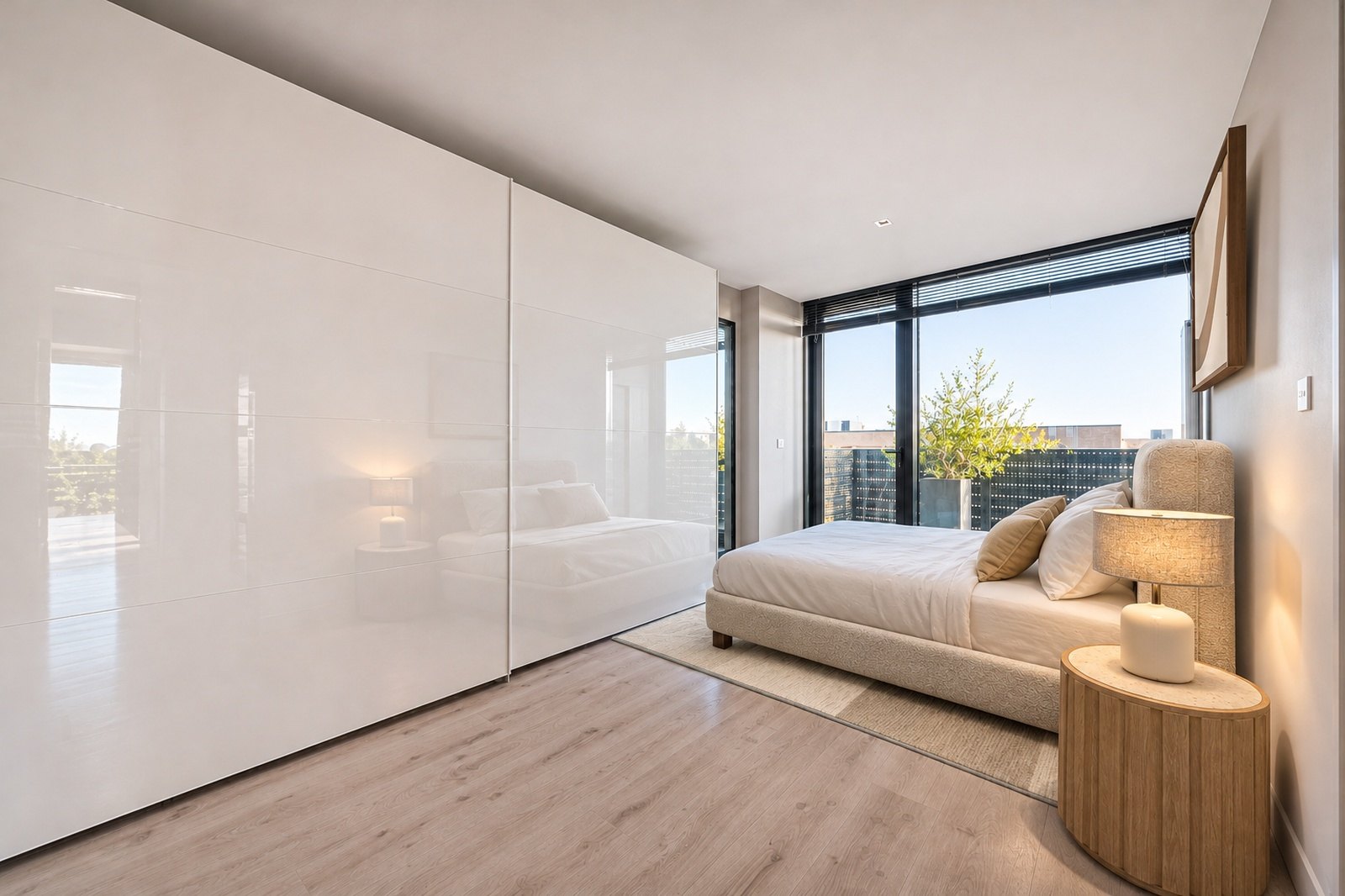
The owner's bed, bedside tables, cables and pictures are gone. In their place stand a new upholstered bed, a round fluted oak bedside table with a lamp, a checked rug and a single picture, with the glazing and the terrace beside them.
Neither set changes the size or layout of the room, and each original stays beside its staged photo, ready to show a buyer.
Common questions
Does the tenant have to agree to the photos?
That depends on the tenancy contract and the rules where the property is, so check both. Either way, ask in writing, say which rooms will be photographed and tell the tenant if their furniture will be removed from the photos.
Can I remove the tenant's belongings but keep the landlord's furniture?
Yes, and if the property is let or sold furnished, you should. The landlord's furniture is part of what you are advertising. Remove only what leaves with the tenant, say in the description which furniture is included, and disclose the edit.
Is an edited photo better than waiting until the unit is empty?
If the unit will be empty while you are still marketing it, plan a second shoot and replace the edited photos with real ones then. If the tenant stays until the sale or the next let, an edited photo with the original beside it is the honest way to show the room.
Can furniture be removed consistently from every photo of a room?
Where a tool clears each photo on its own, two photos of the same corner can come back different, so check every corner that appears in more than one photo. A socket hidden by the sofa in one photo may be in plain view in another. Once the room is restaged, a tool that renders every photo from one 3D model of the room puts the same new furniture in the same place in each.
Removing and restaging with Livium AI
Upload up to six ordinary photos of a lived-in living room or bedroom: Livium AI can remove the existing furniture first, then stage the room with the same new furniture in the same place in every photo. Each staged photo can be downloaded with a "Virtually staged" label or without one, and the original is always kept. You can start with 25 free credits: enough to clear and stage three photos, watermarked, no card.
Stage the room once.
Every photo matches.
Upload a few photos of the empty room. Livium AI furnishes it once, in one 3D model with every piece at its real size, so every photo of the listing shows the same furniture in the same place.
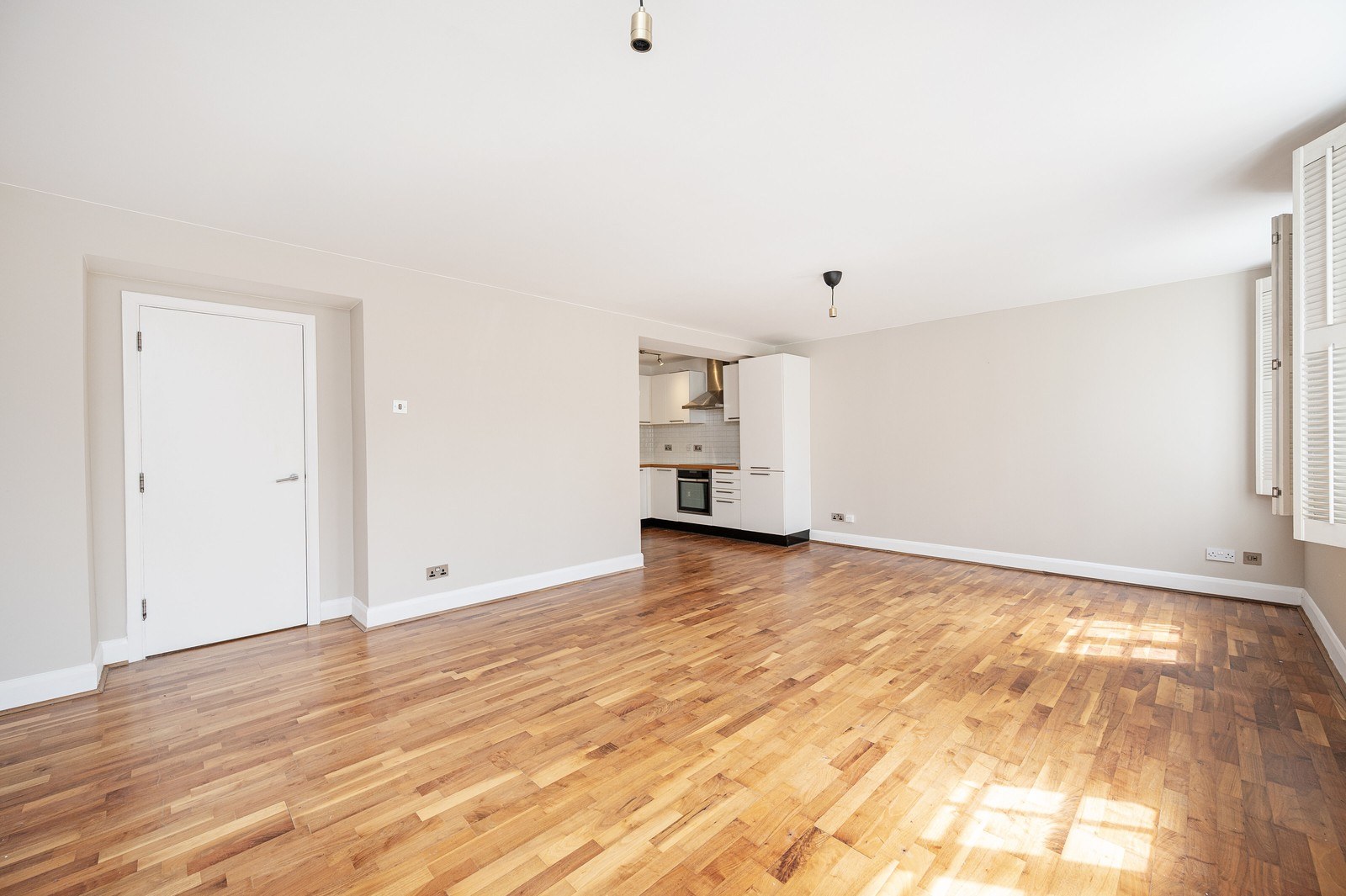
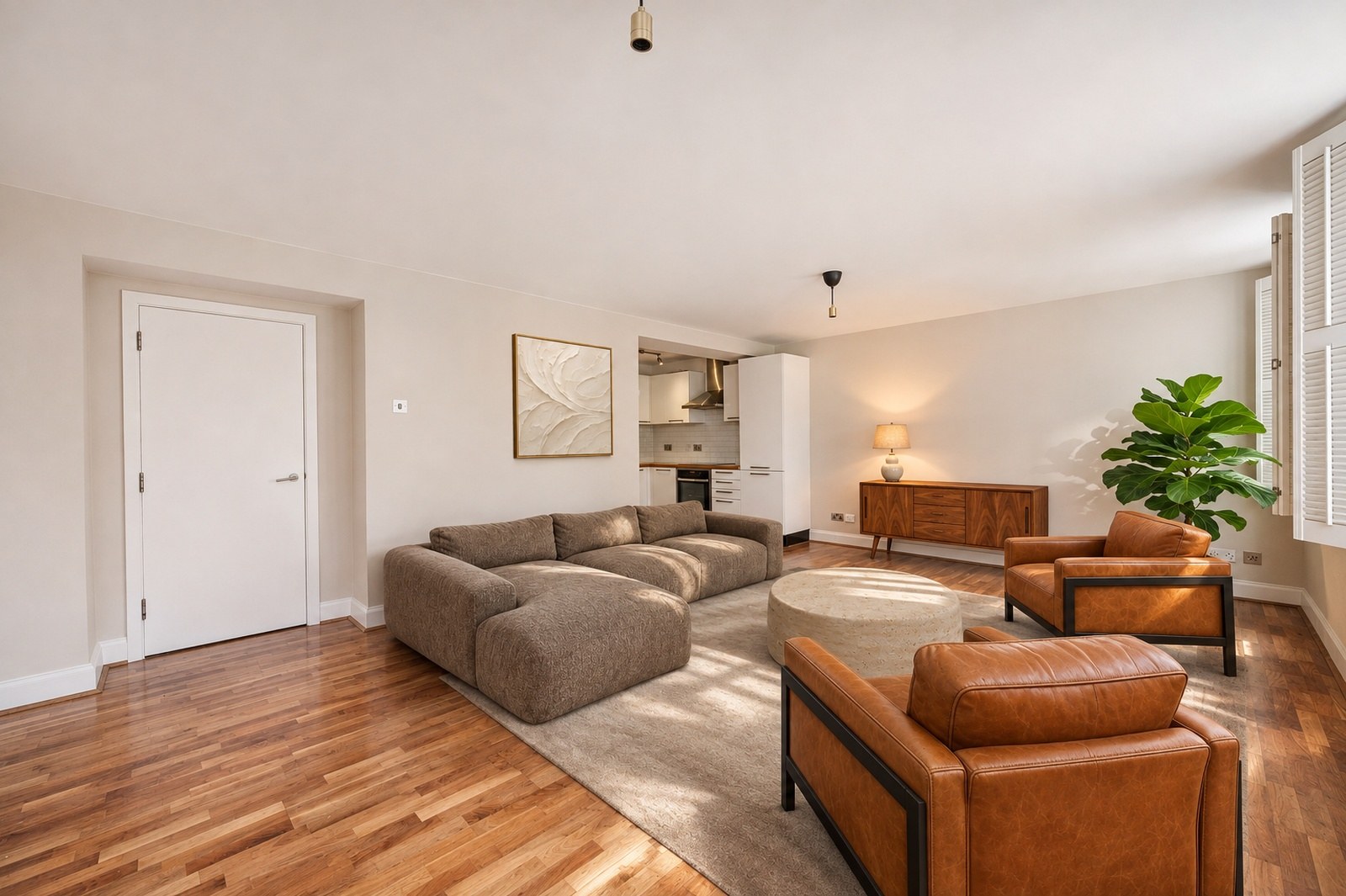 As photographedStaged by Livium AI
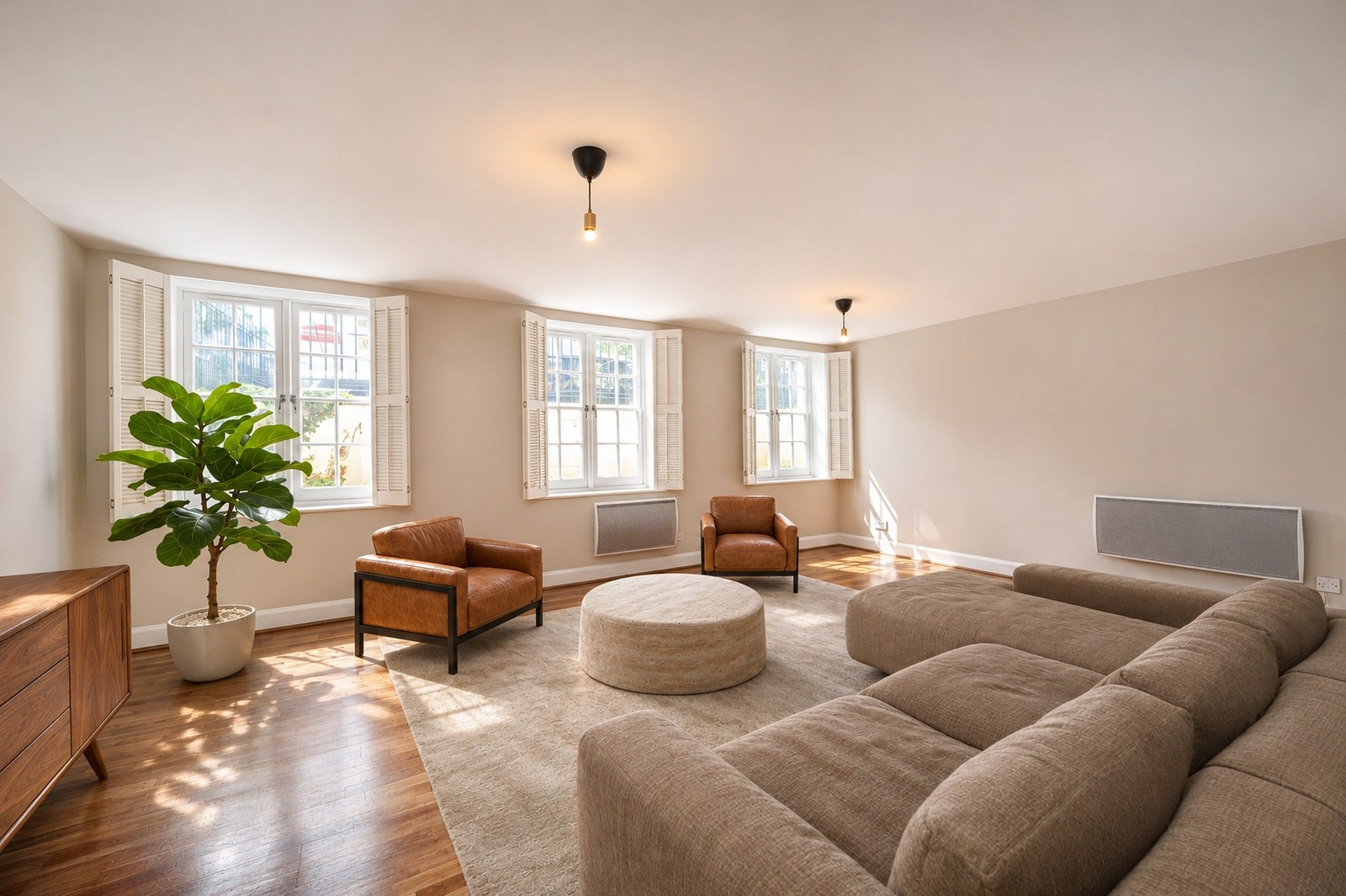
Sources
All links last checked 16 November 2026.
- Livium AI, AI and Virtual Staging Disclosure Policy, section 5.
- Bayut, Best Practices for Taking Real Estate Listing Photos (opens in a new tab), MyBayut, updated 21 October 2026.
- Property Finder, Verified Listings fact sheet and checklist (opens in a new tab), PDF, undated.
- OpenAI, Image generation guide (opens in a new tab), API documentation, undated.
- NorthstarMLS, Guidelines for Virtual Staging and AI-Enhanced Listing Photos (opens in a new tab) (proposed), 10 July 2026.
- NSW Government, Advertising guidelines for property agents in NSW (opens in a new tab), updated 21 September 2026.
- California Business and Professions Code, section 10140.8 (opens in a new tab) (AB 723), in force from 1 January 2026, as reproduced by California.Public.Law.
- CRMLS, Digitally Altered Image Guidance and FAQs (opens in a new tab), updated 20 October 2026.
- Metro MLS, New Photo Upload Requirements in Flexmls: Original, Altered and Watermark (opens in a new tab), 21 April 2026.
- Bayut, Here's Your Guide To The TruCheck Badge (opens in a new tab), Bayut Agent Portal, 28 October 2024.
Keep reading
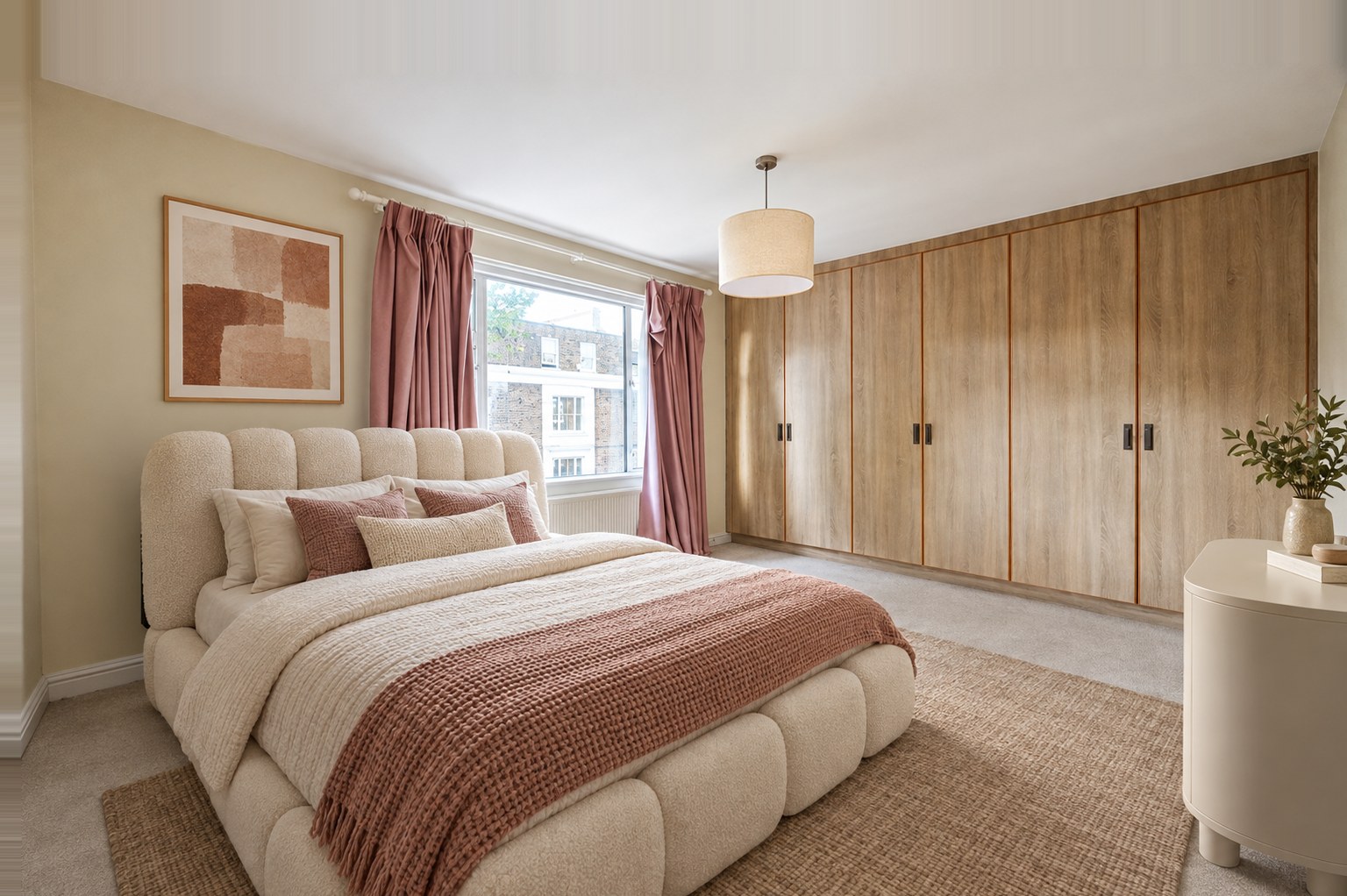
Virtual staging vs 3D rendering: which do you need?
A 3D render is drawn from plans, so it can show a unit not yet built. Virtual staging adds furniture to a photo of a real room. Which to use, and the costs.
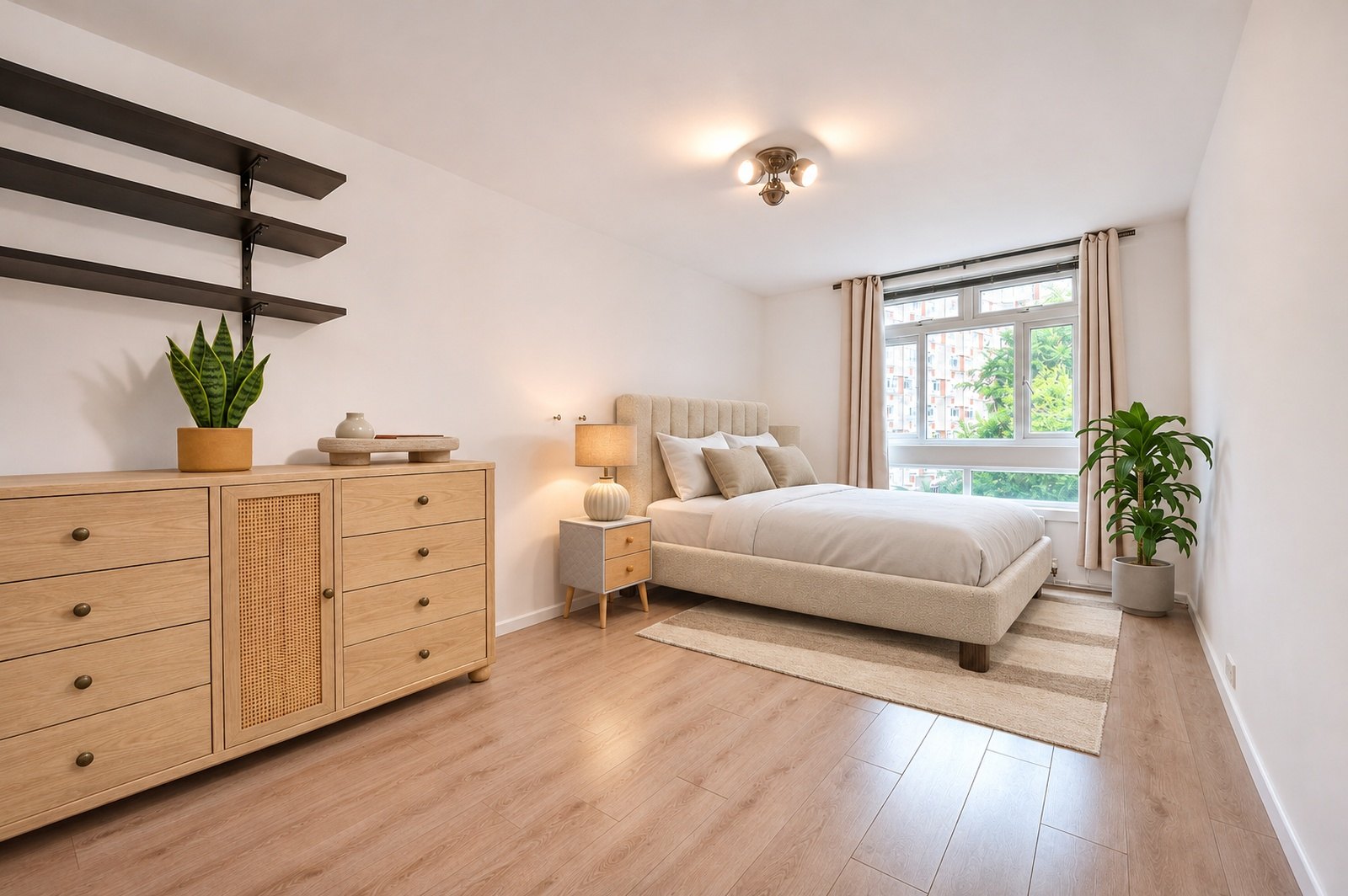
How to stage a bedroom for a property listing
Stage a bedroom by showing the largest bed it really takes, with room to walk round it. Bed sizes in metres, where the bed goes and what else to add.
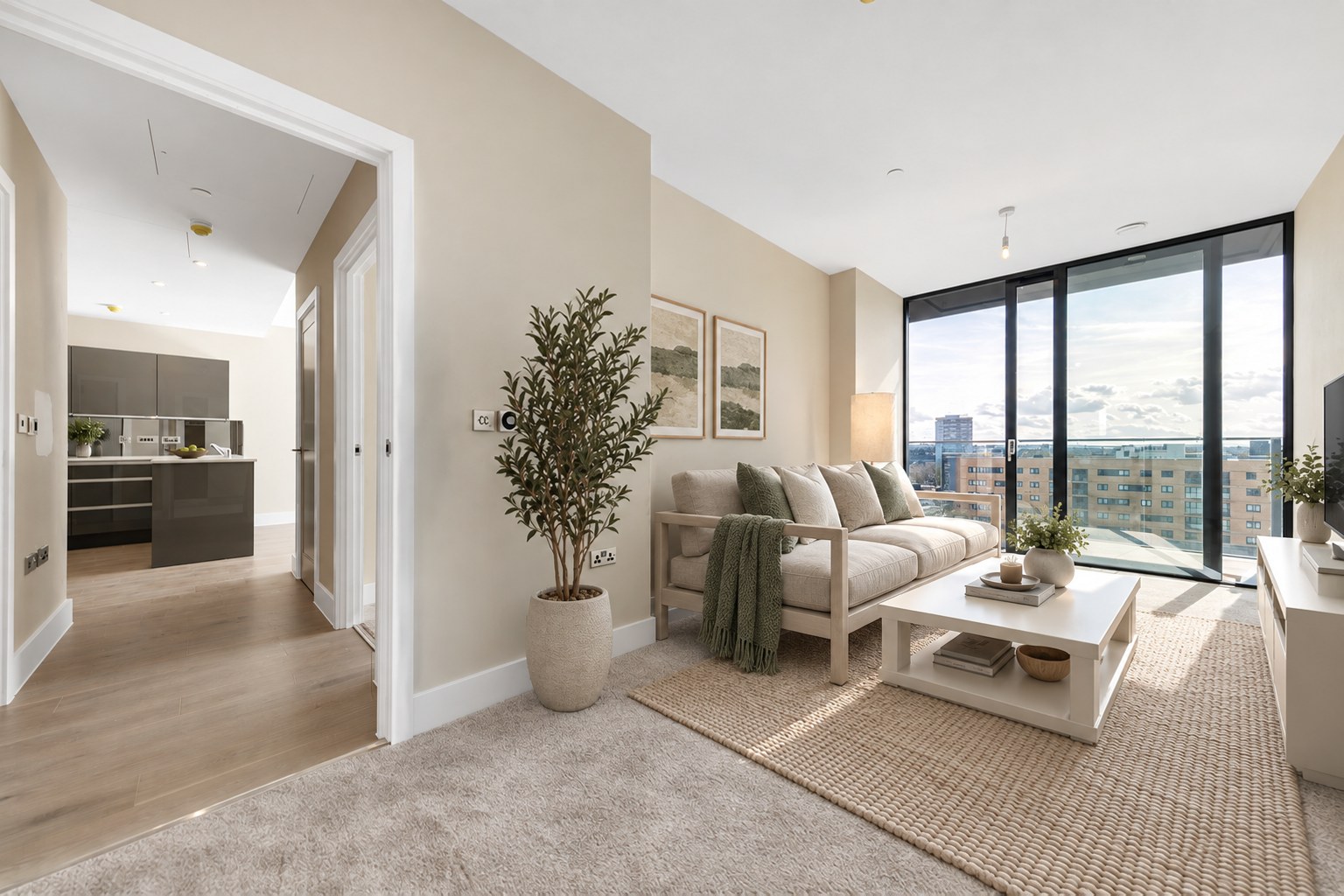
How to stage an empty living room for a listing
Stage an empty living room so buyers can read its size, the seating and the way through: real sofa sizes, spacing rules of thumb and what to keep clear.