Virtual staging style: one look for the whole listing
Stage every room of a listing in one style family, and keep each room's furniture identical in every photo of it. How to choose the style, and what must match.
On this page
Stage every room of a listing in one style family, so the home reads as one place, and keep each room's furniture identical in every photo of that room. The first is good practice. The second is not optional: a style that wanders between rooms looks unplanned, but a sofa that changes between two photos of the same room describes a room that cannot exist. Below: the levels of matching, how to choose a style, how to carry it from room to room, and what must match exactly.
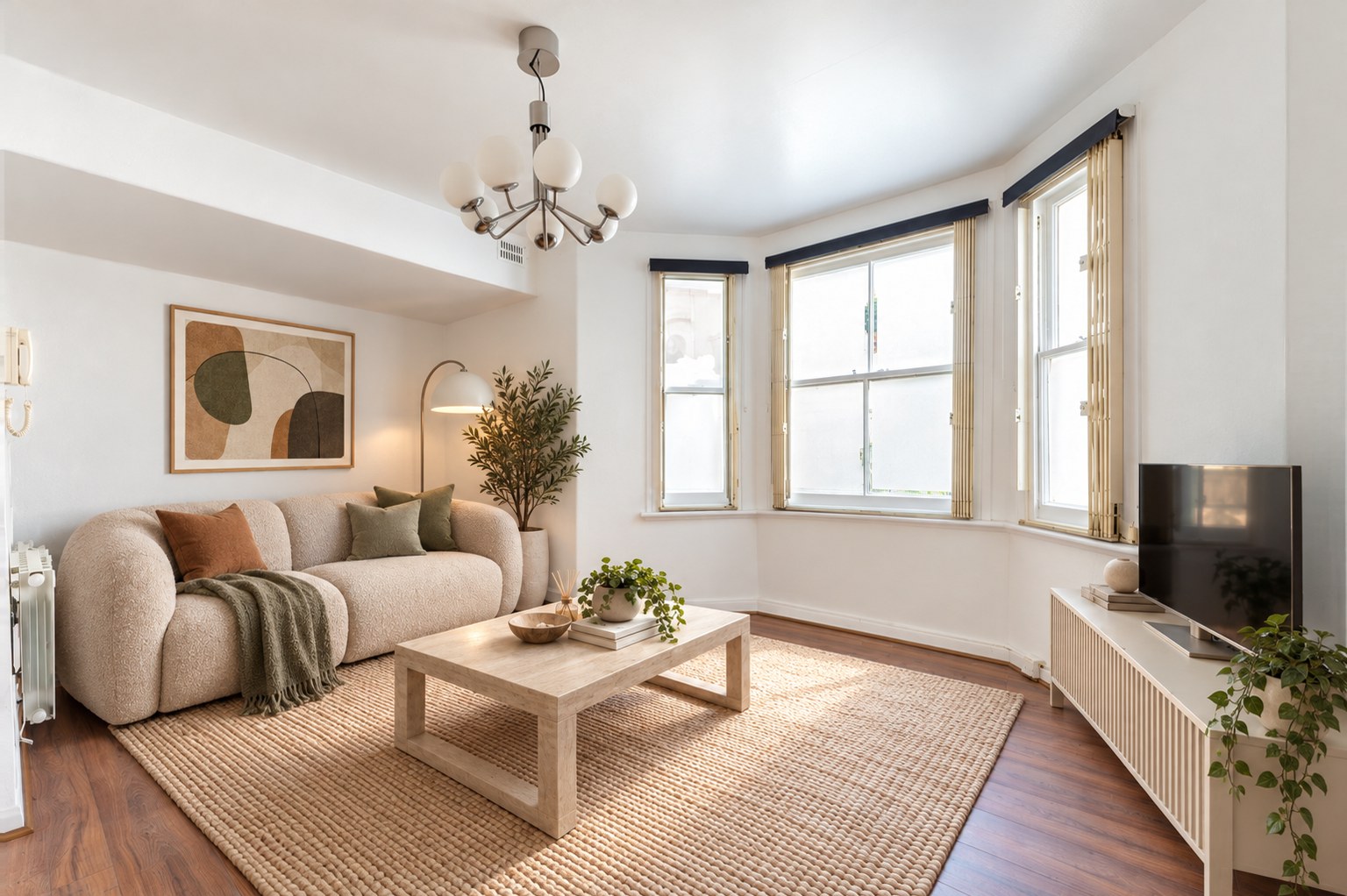
Livium AI, which we make, gives you both. Each room is staged as one furnished 3D model, so its furniture is identical in every photo, and every room's pieces come from the same catalogue, so the whole listing can share one look.
Key points
- Within one room, every photo must show the same pieces in the same places. Across rooms, one style family is good practice, not a rule.
- Furniture seen through a doorway, in a mirror or across an open-plan space appears in two photos and must match in both.
- Choose the style from the building and the likely buyer, starting with the largest room.
- In NAR's 2025 survey of US Realtors, "For home buyers, staging the living room was considered the most important (37%)", followed by the primary bedroom (34%).
- A prompt can carry a style from photo to photo. Keeping the same pieces in the same places takes one design of the room, which is how Livium AI stages every room.
Coherent or consistent: what is the difference?
Consistent means one room shows the same furniture in every photo of it. Coherent means different rooms share a style. A listing needs the first and is better for the second.
| Level | What should match | Needed? |
|---|---|---|
| One room, every photo | The same pieces, in the same places, at the same sizes | Yes |
| Rooms that see each other | Any furniture visible from both, through a doorway, a mirror or an open plan | Yes |
| Every room in the listing | A style family: woods, metals, colours, fabrics | Recommended |
| Different listings | Nothing | No |
Consistency is a question of truth: one living room cannot hold two different sofas, and a buyer who sees both stops trusting the photos. Coherence is a question of taste: a bedroom in pale oak beside a living room in dark walnut is a choice, and a buyer forgives it. Our article on why the sofa changes between staged photos covers the first in detail. This one is mostly about the second, and about where the two meet.
Which rooms can see each other?
More than you expect. A guide to whole-house colour schemes by Laura Gaskill on Houzz (opens in a new tab) (4 March 2022) starts with this step: "Walk through your house and note which spaces you can see from each room." It is written for paint, and it is the same list you need for staging, because furniture visible from two rooms appears in two photos.
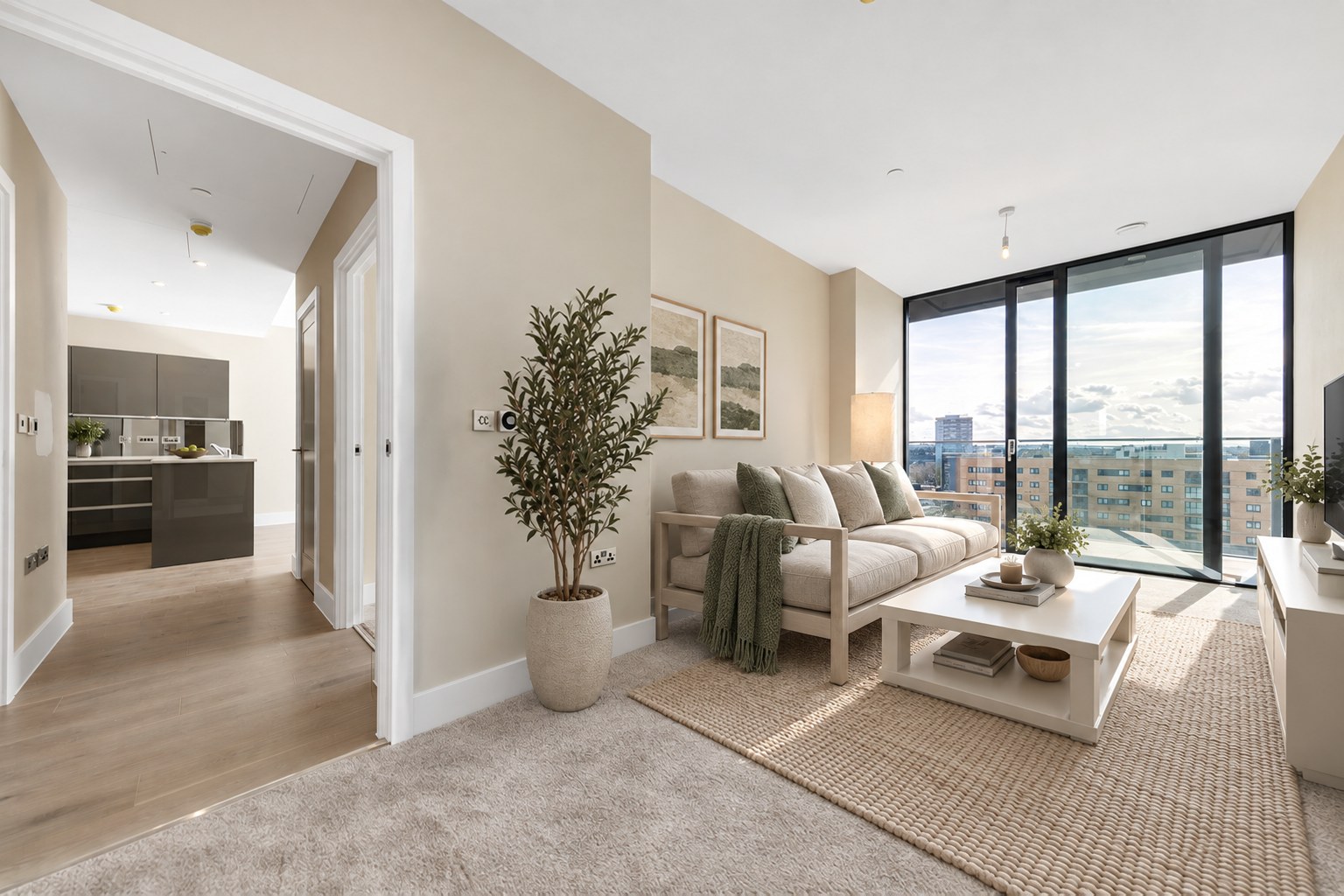
- Doorways. A hallway photo looking into the living room shows the living room's sofa, so it has to be the sofa in the living room photos.
- Open plan. The dining table seen from the sofa is the table seen from the kitchen. Our guide to staging an open-plan room from every angle covers the zones.
- Mirrors and glass. A mirror in a bedroom photo reflects the staged bed, and a glass door shows the room beyond. A reflection has to show the same furniture as the room it reflects.
- Balconies and terraces. Outdoor furniture seen through the living room glass belongs to both photos.
How do you choose a style for a listing?
From the building and the buyer, starting with the biggest room. The fixed finishes are for sale and the furniture is not, so the furniture should suit the floor, the joinery and the light rather than compete with them.
- Start with the main room. Gaskill's guide says to start "by picking a colour for the biggest, most centrally located room", which "will most likely be your living room or kitchen". For staging, that is the living room: decide its look first and let the other rooms follow.
- Read the fixed finishes. A dark wood floor, pale oak joinery or white gloss wardrobes each narrow the woods and colours that sit well beside them. Match the furniture's wood to the floor's family or contrast it clearly, and avoid a near miss.
- Think of the likely buyer or tenant. A one-bedroom for a first buyer, a family home and a short-term let ask for different amounts of furniture, more than different styles. Our guide to virtual staging for rentals in Dubai covers lettings.
- Keep the base calm. A neutral base lets the room's size and light show, and one accent colour repeated in cushions, throws and rugs ties the rooms together. Gaskill's guide suggests you "choose shades of the same hue for adjacent rooms or walls", which works for textiles as well.
Which rooms deserve the most care? The National Association of Realtors' 2025 Profile of Home Staging (opens in a new tab) asked US agents. "For home buyers," its release says, "staging the living room was considered the most important (37%), followed closely by the primary bedroom (34%) and the kitchen (23%)", and staging the guest bedroom (7%) "was the least important". NAR invited a random sample of 49,806 active Realtors in February 2025 and received 1,266 usable responses. Those are agents' opinions, not measured results: our article on home staging statistics explains how to read them.
How do you carry one style from room to room?
Repeat a few things, not everything. A home reads as one place when its rooms share a small set of materials and colours, while each room keeps furniture suited to what it is for.
| Element | Keep the same across rooms | Let it vary |
|---|---|---|
| Wood | One family: pale oak, or walnut | The pieces made from it |
| Metal | One finish for legs and lamps | The shapes |
| Colour | A base and one or two accents | Which piece carries the accent |
| Rugs | Colours that relate | Size, pattern, texture |
| Art and plants | One kind of picture, one kind of plant | How many, and where |
Rugs are where this shows most. A Livingetc article on using two rugs in a room (opens in a new tab) (2 November 2026) suggests that rugs need not match but should share a link, such as colour or the level of contrast. The same holds from room to room.
What must match exactly?
Everything inside one room's photos, and anything a photo shows of another room.
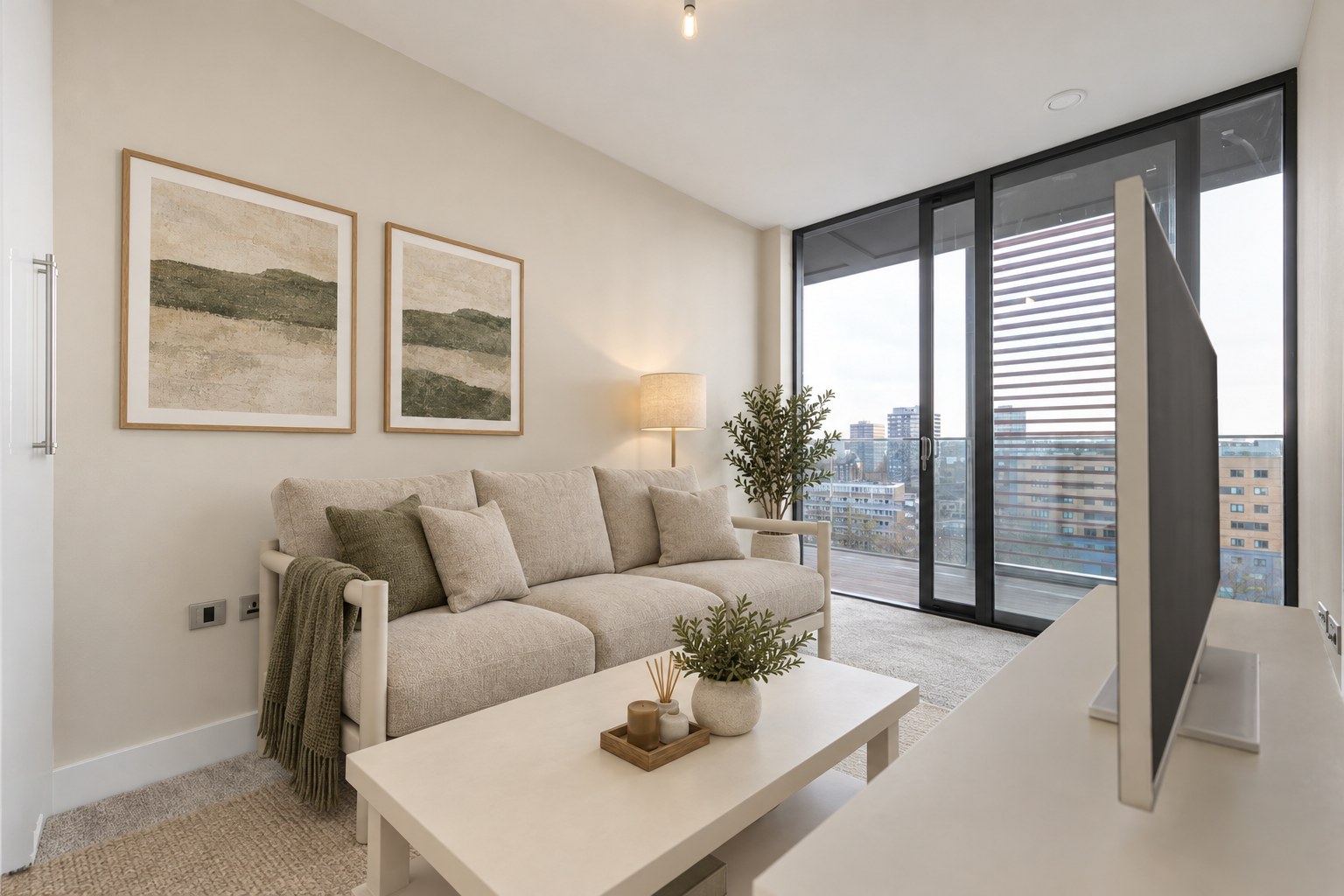
- The same room. The same pieces, in the same places, at the same sizes and in the same materials, in every photo. Our virtual staging checklist has the full set of checks.
- A room seen from another. The sofa seen from the hall, the bed in the wardrobe mirror, the dining table seen from the sofa.
- Two looks of one room. If you want to show a room in two styles, present them as two separate sets, each labelled, so that no buyer reads them as one room.
Different rooms can and should have different furniture. A bedroom does not need the living room's sofa fabric on its bed. It needs to look as if the same person chose both.
How do AI tools handle style across rooms?
Style carries easily. Positions do not.
A prompt, or a staged photo shown to the model as a reference, carries colours, materials and the general shape of the furniture from one photo to the next. OpenAI's image prompting guide (opens in a new tab) suggests you "create a reusable character reference to help preserve appearance across scenes, poses, and pages", which is the same idea. Where the furniture stands is harder: OpenAI's image generation guide (opens in a new tab) says its models "may have difficulty placing elements precisely in structured or layout-sensitive compositions".
So a listing can look coherent from room to room while each room disagrees with itself from photo to photo. Our article on staging with ChatGPT or Gemini shows where chat tools keep the style and lose the layout.
Stage the whole listing in one look with Livium AI
We work the other way round from a prompt: the room comes first, then the photos. For each living room or bedroom you upload up to six ordinary photos, with no special camera, floor plan or scan, and choose the pieces or press "Furnish for me". The design adds a rug, pictures and plants.
- Consistent inside each room. Each room is one furnished 3D model, rendered from every photo's camera, so the same sofa stands in the same place in each photo of it.
- Coherent across rooms. Every room's pieces come from the same catalogue of sofas, armchairs, beds, tables, storage and lamps, each a 3D model at its real size, in several styles, so the woods and colours can carry from room to room.
- Quick, and priced by the photo. A room usually takes minutes. A living room and a main bedroom at three photos each are 30 credits, $3.00 on Pro at the time of writing (our plans).
Each staged photo downloads with a "Virtually staged" label or without one, and its original is kept beside it. See one room from every angle on our page about consistent virtual staging.
Common questions
Does every room in the listing need to be staged?
No. Stage the rooms a buyer judges by their furniture, the living room and the main bedroom first, and leave kitchens and bathrooms as photographed, because their fittings are what is for sale. Our guide to how many listing photos you need covers how many of them to stage.
Should staged rooms match furniture that stays in a part-furnished home?
Yes, as far as you can. If the owner's dining table stays in an open-plan photo, stage the living area in woods and colours that sit beside it, and remember that the real table appears in more than one photo too.
Is a studio flat one style or two?
One. A studio is one room, so every photo of it is a photo of the same room: the bed, the sofa and the table must be the same in each, whichever area the camera faces.
Give your next listing one look, room by room
Livium AI is built for exactly what this article asks of a listing. Each room is one furnished model, so its photos agree. Every room draws on one catalogue, so the home reads as one place. A room usually takes minutes, and each original stays beside its staged photo. Start with 25 free credits: no card, enough for a room of up to five photos.
Stage the room once.
Every photo matches.
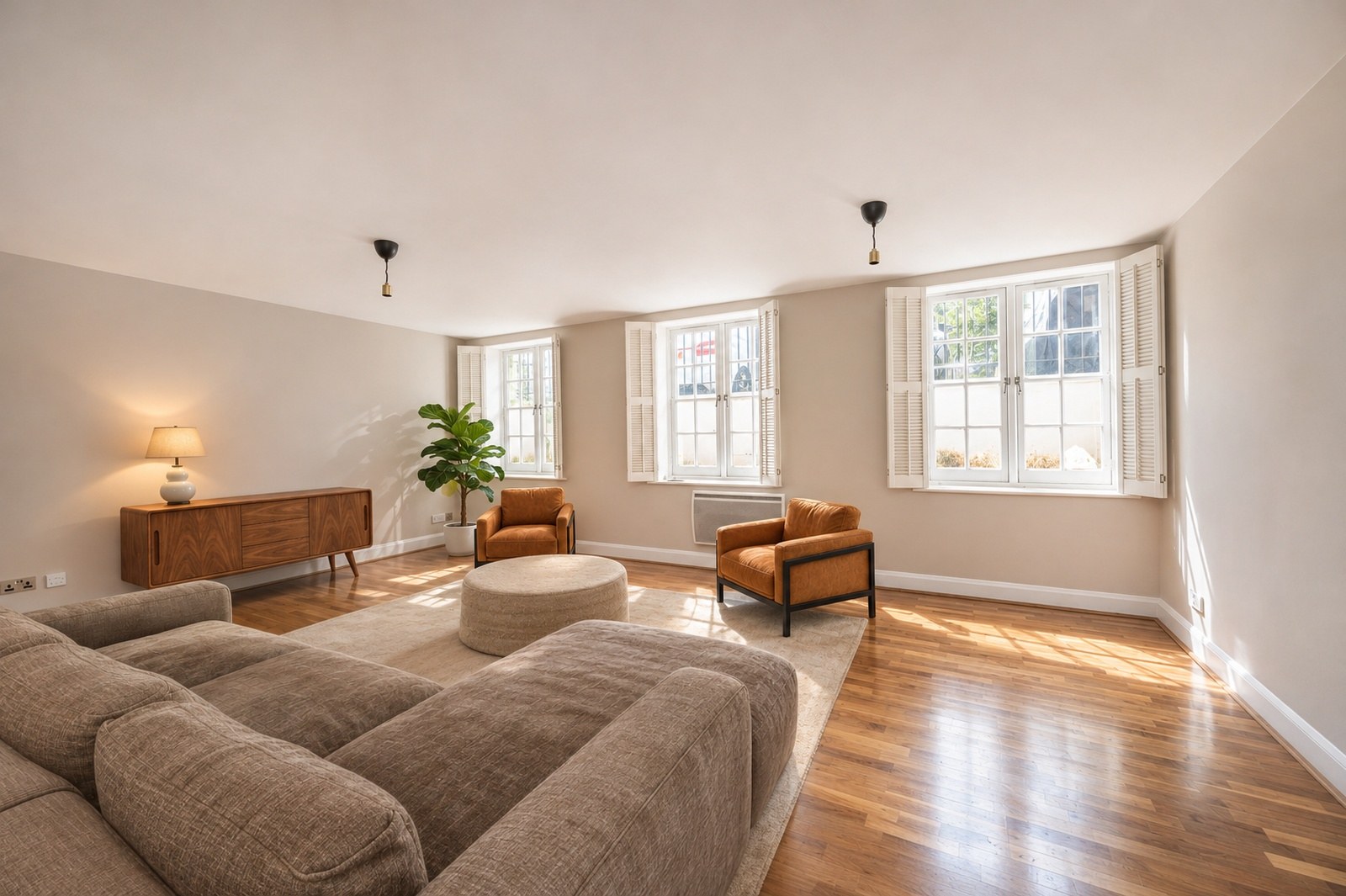
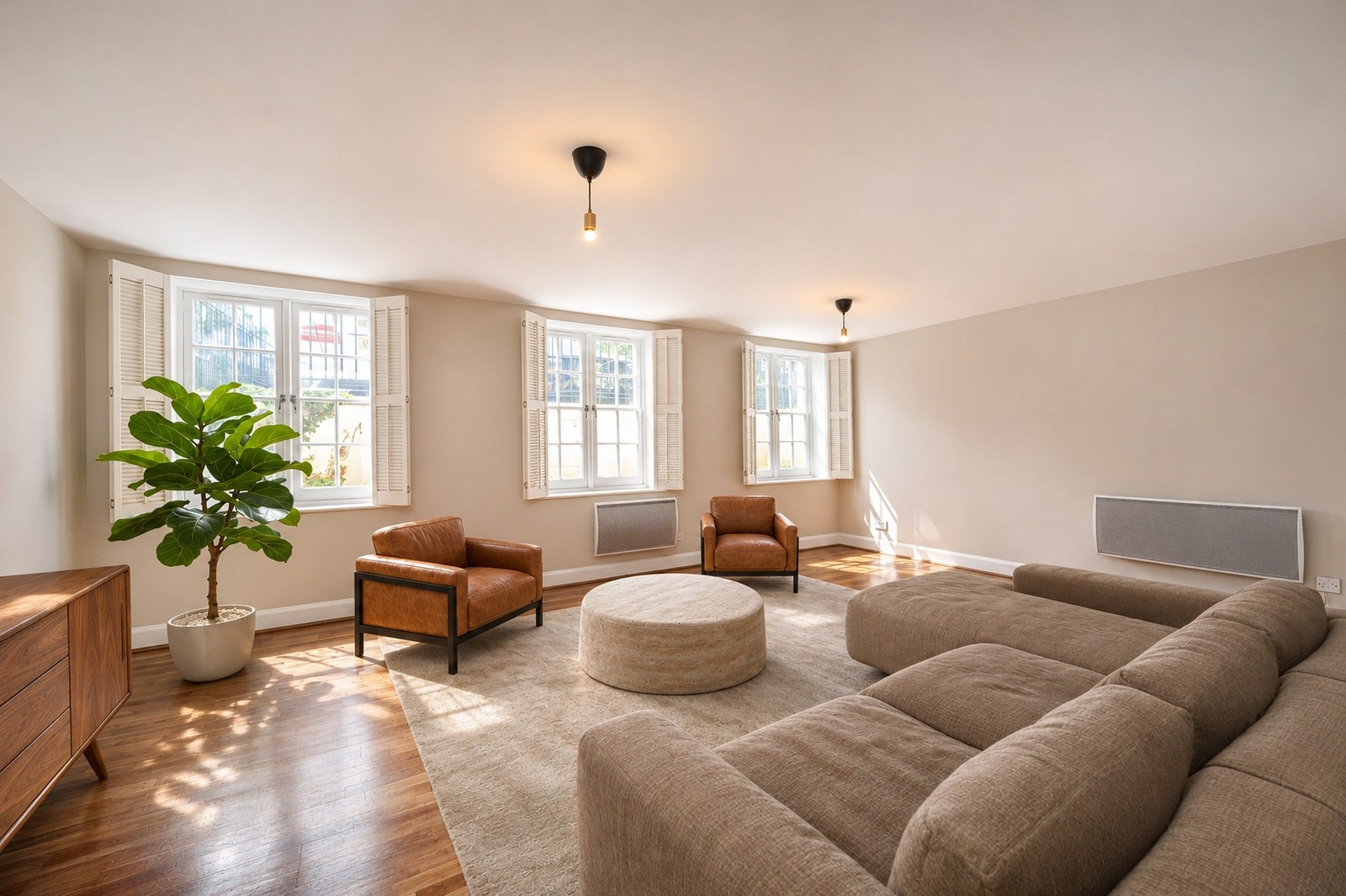
Upload a few photos of the empty room. Livium AI furnishes it once, in one 3D model with every piece at its real size, so every photo of the listing shows the same furniture in the same place.
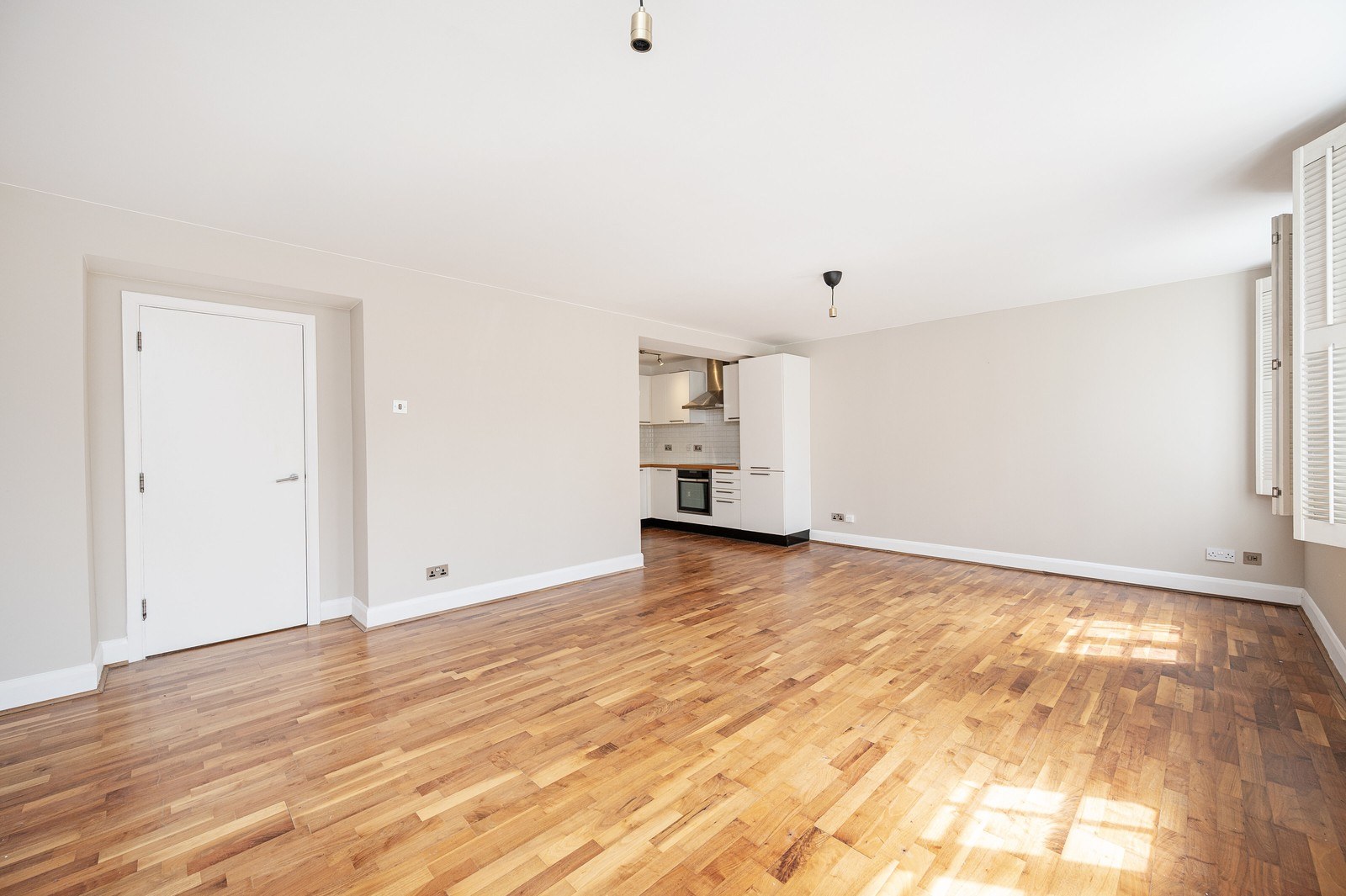
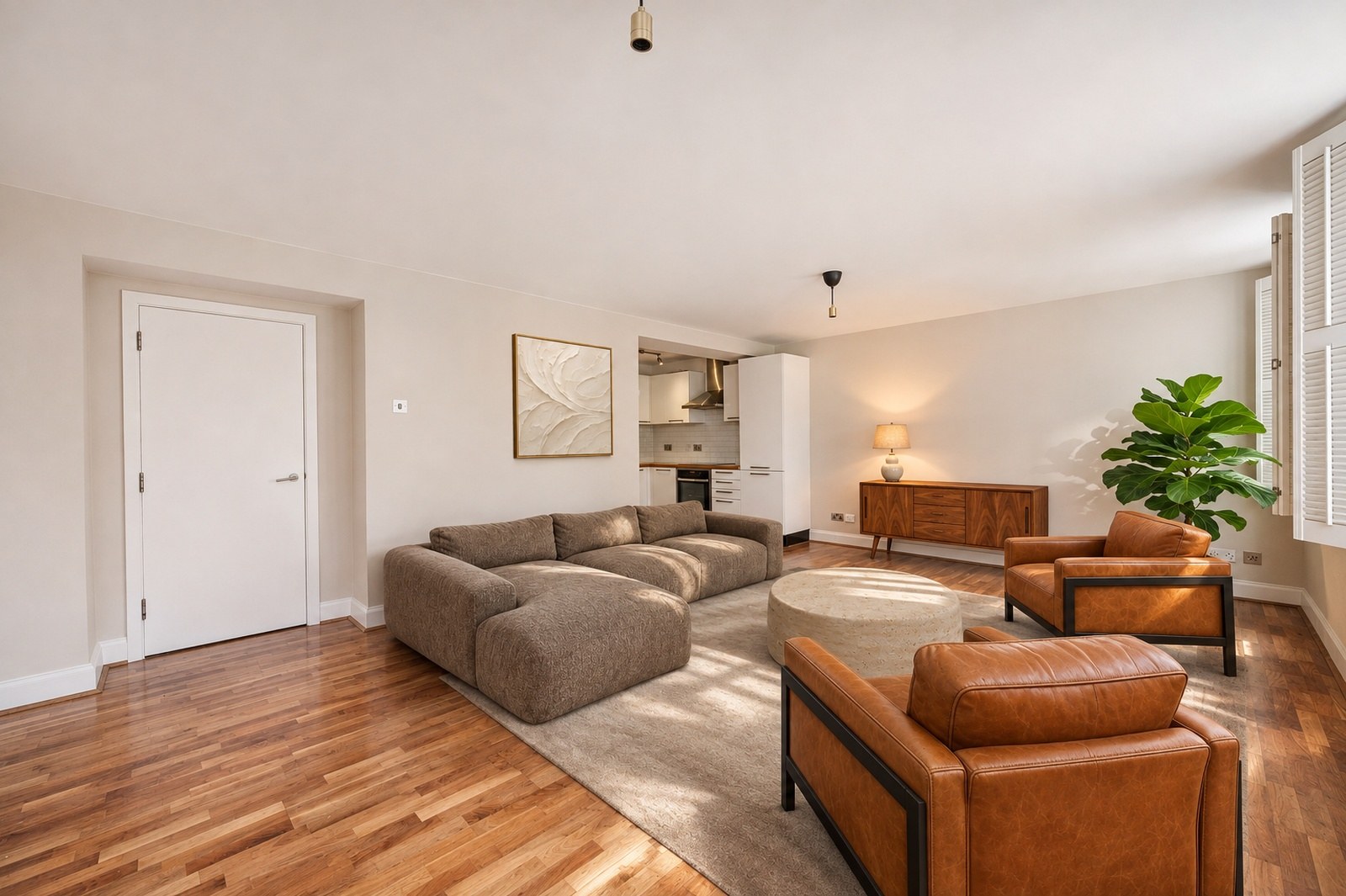 As photographedStaged by Livium AI
Sources
All links last checked on 23 November 2026.
- Laura Gaskill, How to Decide on a Colour Scheme for the Whole House (opens in a new tab), Houzz, 4 March 2022.
- National Association of Realtors, NAR Report Reveals Home Staging Boosts Sale Prices and Reduces Time on Market (opens in a new tab), press release on the 2025 Profile of Home Staging, 6 May 2025.
- Iokasti Sotirakopoulou, Can You Have More Than One Rug in a Room? (opens in a new tab), Livingetc, 2 November 2026.
- OpenAI, Image prompting: Keep a character consistent (opens in a new tab), OpenAI Cookbook, undated.
- OpenAI, Image generation guide: Limitations (opens in a new tab), OpenAI API documentation, undated.
Keep reading
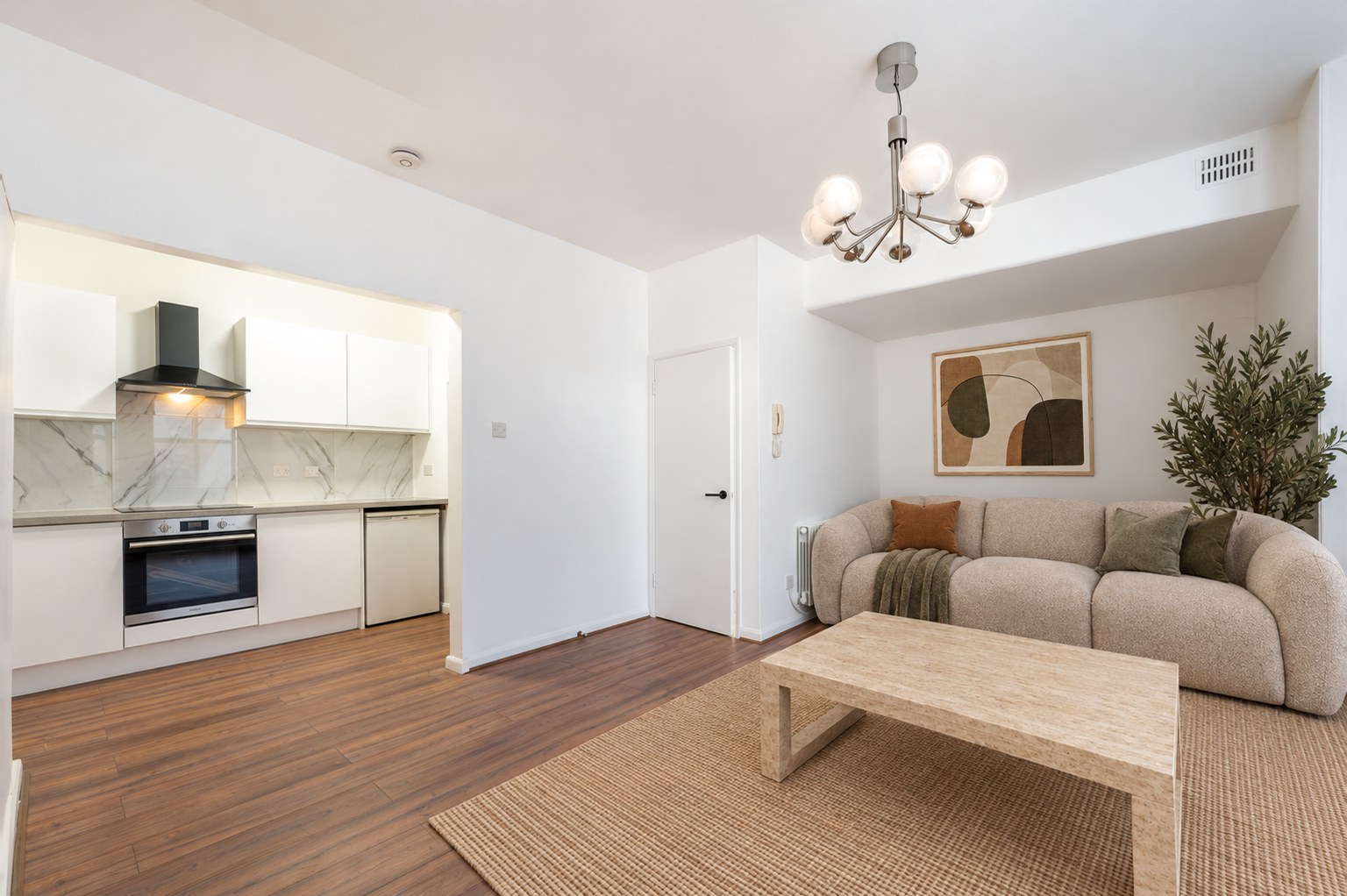
Virtual staging an open-plan room from every angle
Stage an open-plan room by deciding its zones once and showing that layout from every angle: where the seating, rug and table go, and what stays as it is.
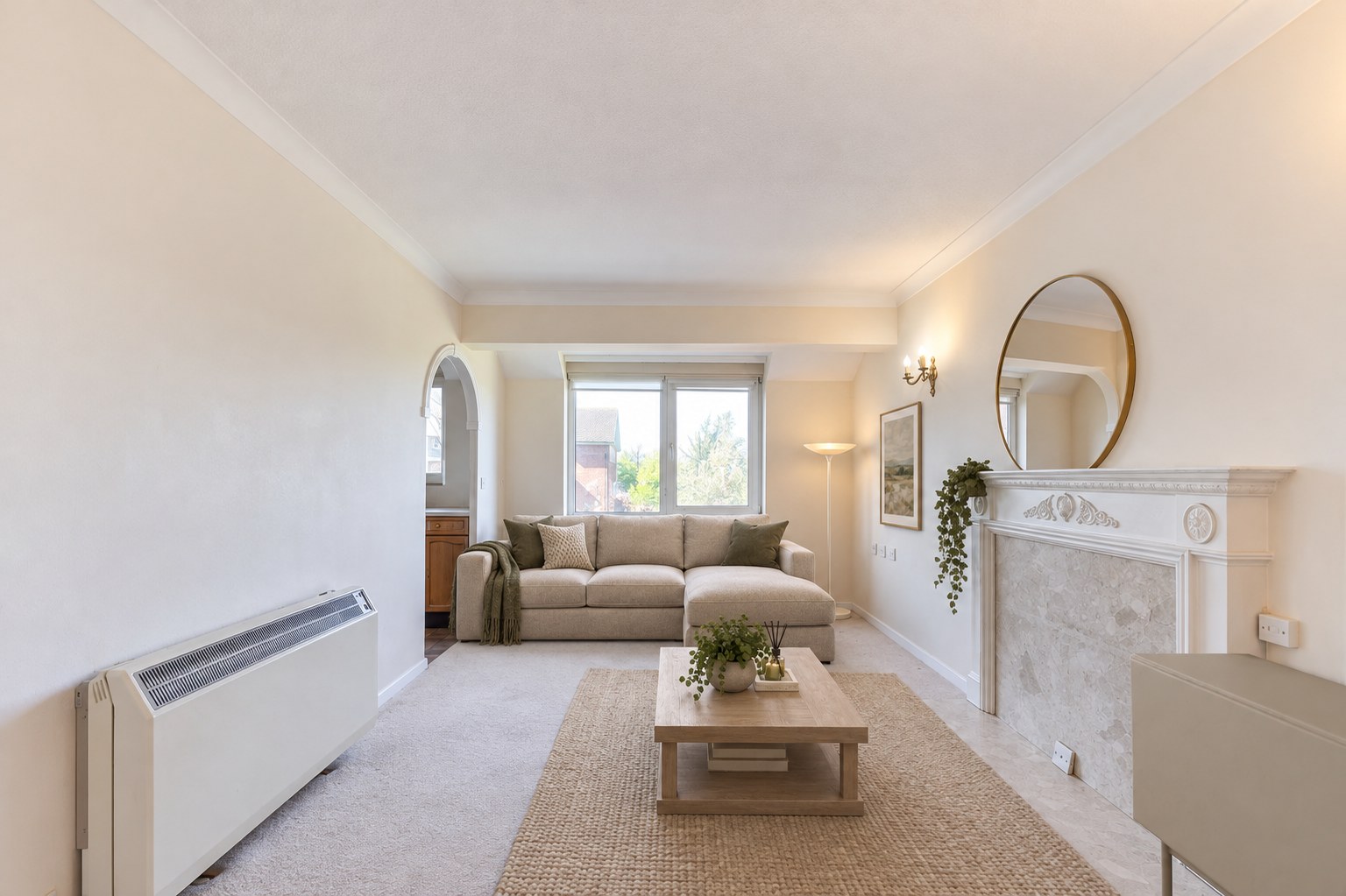
How to check a set of virtually staged photos: a checklist
A checklist for any set of staged photos of one room: the same pieces, places and sizes in every photo, nothing built changed, labels and originals in place.
Can ChatGPT do virtual staging? What works, what doesn't
ChatGPT and Gemini can stage one listing photo. Where they slip on a room's other photos, furniture size and the building, and how to stage the whole room.