Home staging statistics, checked against their sources
Most home staging statistics lead to no study, or to US data from 2011 to 2013. We traced each one and set out what the NAR survey and the research found.
On this page
Few of the home staging statistics repeated online lead to a study you can read. The famous "staged homes sell 73% faster" comes from the Real Estate Staging Association's figures for 2011: 174 US homes sat unsold for an average of 156 days, were staged, and sold an average of 42 days later. The best recent survey, by the National Association of Realtors in 2025, records what agents think, not what homes sold for: 29% of sellers' agents said staging raised offers by 1% to 10%. We found no independent study of virtual staging's effect and no data for the UAE.
Key points
- "Staged homes sell 73% faster" comes from the Real Estate Staging Association's 2011 figures, which compare 174 homes before and after staging, not staged homes with unstaged ones.
- "Sell 87% faster" is the same association's 2012 figure: 26 days to a first offer for homes staged before listing, against 198 days for homes listed first and staged later.
- In the National Association of Realtors' 2025 survey of 1,266 US agents, 29% of sellers' agents said staging raised the offer by 1% to 10%, 30% saw no difference and 34% were not sure.
- A 2015 experiment published in the Journal of Housing Research found staging made no significant difference to what participants would pay. A December 2025 working paper estimates that homes shown furnished sold for about 10% more and a week sooner.
- We found no study behind "5% to 10% more", "32% faster" or "78% of buyers cannot tell", no independent study of virtual staging's effect, and no staging data for Dubai or the UAE.
Which staging statistics can you trust?
Few of the famous ones, as they are usually worded. In November 2026 we opened the pages that repeat each figure, followed their citations as far as they went and read the sources that still exist. We sell virtual staging, and we want you quoting numbers that survive a seller's questions.
Outdated means real but more than ten years old. Opinion means it records what people said, not what happened.
| Claim | Credited to | What we found | Verdict |
|---|---|---|---|
| "Staged homes sell 73% faster" | Real Estate Staging Association (RESA) | 174 US homes in 2011: unsold after 156 days, sold 42 days after staging. No unstaged comparison group. | Outdated |
| "Staged homes sell 87% faster" | RESA | 2012: 26 days to a first offer if staged before listing, against 198 days if listed first and staged later. | Outdated |
| "Staging raises the sale price by 5% to 10%" | RESA | Financial Samurai (opens in a new tab) credits "a 2023 survey" and links only RESA's home page. No study found. | Untraceable |
| "Professional photos add $3,400 to $11,200" | Redfin | Real: 2013 US sales, professional (DSLR) against point-and-shoot cameras. $11,200 is the $400,000 to $499,999 band only. | Outdated |
| "Professional photos sell homes 32% faster" | 360 Booth, VHT Studios or Redfin | No page we opened links a study that contains it. | Untraceable |
| "78% of buyers cannot tell virtual staging from physical staging" | "A 2025 study published by HousingWire" | No such study found on HousingWire. | Untraceable |
| 29% of sellers' agents saw offers rise 1% to 10%, and 49% saw a shorter time on the market | National Association of Realtors (NAR), 2025 | Real: agents' views, February 2025, 1,266 answers, a 2.5% response rate. | Opinion |
| Staged homes sold at 113% of list price on average, with an accepted offer in 9 days | RESA, third quarter of 2026 | Real: 114 US homes that stagers chose to report, many through a "Sold Over List Price Club". | Sourced |
Where does "staged homes sell 73% faster" come from?
From RESA, a US trade body for home stagers, and its own figures for 2011. The pages that repeat it today credit RESA without linking a study, so we found the original wording in archived copies of RESA's consumer guide.
Orchard's list of staging statistics (opens in a new tab) (30 May 2023) says "Staged homes spend 73% less time on the market than those that aren't staged", with a footnote number but no list of references. RE/MAX Canada (opens in a new tab) (updated 29 April 2026) credits "a study by the Real Estate Staging Association" and links RESA's home page. Raleigh Realty's list (opens in a new tab) has a different 73%: "In a 2021 survey of 4,600 staged properties, 73% sold over list price", credited to a RESA file that now refuses access.
In 2013, HousingWire (opens in a new tab) (3 September) and NAR's staging blog (opens in a new tab) (7 October) both linked the same RESA document. That address now shows "Website Not Found", but the Internet Archive kept copies.
The 2012 edition of RESA's "Consumer's Guide to Real Estate Staging" (opens in a new tab), which includes the 2011 statistics, says: "We studied 174 homes previously on the market on average 156 days before the homeowners gave up trying to sell on their own and called in a professional home stager. Those same homes were staged, relisted and sold on average in 42 days after staging. This is 73% less time on the market."
So 73% is 42 days set against 156. The 42 days began after five months on the market, and the guide does not say how the homes were chosen or whether their prices changed when they were relisted.
The 2013 edition, with 2012 figures (opens in a new tab), had new numbers: 89 homes unsold for 166 days, then a "first offer, on average, 32 days after being professionally staged. This is 81% less time on the market." The same page still carries the figure "73% Less time on market", and HousingWire's report printed the new numbers with the old percentage.
That edition is also where "87% faster" comes from. A separate group of 359 homes staged before listing reached a first offer in 26 days, against 198 days (166 plus 32) for the homes listed first and staged later. The 2011 edition gave 79% for the same comparison.
The 73% now travels without RESA. In March 2026 an AI staging vendor headlined "Why AI Homes Sell 73% Faster" (opens in a new tab), based on what it calls "our modeled mid-tier scenario" and, further down, "a Modeled Scenario, not a third-party statistic". RESA's own statistics page (opens in a new tab) no longer uses the figure. It publishes quarterly results from homes stagers report and says they "do not establish staging's effect or guarantee outcomes".
What does the NAR 2025 report really say?
It records what a sample of US agents believed about staging, not what staged homes sold for. NAR invited 49,806 members in February 2025 and received 1,266 usable answers, a 2.5% response rate, according to its press release of 6 May 2025 (opens in a new tab).
The release says 29% of agents "reported that staging their sellers' homes led to a 1% to 10% increase in the dollar value offered". The charts in the full report (opens in a new tab) show the answers the headline leaves out.
| Effect of staging on the offer | Sellers' agents | Buyers' agents |
|---|---|---|
| Up 1% to 5% | 19% | 17% |
| Up 6% to 10% | 10% | 10% |
| Up more than 10% | 7% | 8% |
| No effect | 30% | 41% |
| Not sure | 34% | 24% |
On speed, 49% of sellers' agents said staging cut the time on the market (30% slightly, 19% greatly), 17% saw no effect, 13% said it lengthened it and 21% did not know. On buyers, 83% of buyers' agents said staging "made it easier for a buyer to envision the property as their future home".
The median spent on a staging service was $1,500 (about AED 5,510), against $500 (about AED 1,840) when the agent staged the home personally. Those are US figures. For local prices, see what home staging costs in Dubai.
If you quote the report, read the charts as well as the summary. The executive summary says 60% of buyers' agents saw staging affect "most buyers' view of the home most of the time", while the chart and the release put that 60% on "some home buyers but not always".
Does staging increase the sale price?
The research disagrees. Three academic studies have measured it, and they do not reach one answer.
Lane, Seiler and Seiler (Journal of Housing Research, 2015) (opens in a new tab) ran an experiment in which would-be buyers toured virtual houses that differed in furniture quality and wall colour, as The Real Deal reported in December 2013 (opens in a new tab). The abstract says participants "do not significantly differ in their valuations based on staging conditions", though good furnishings and a neutral wall colour did affect their "perceived livability and overall opinion of the home". It concludes that "staging is not enough to result in a higher selling price". It did not test speed of sale.
A second experiment in the same journal, Thaler and Koch (2023) (opens in a new tab), is the closest test to virtual staging we found. Students valued the same empty apartment from photos with or without furniture, with no significant difference "on aggregate". Those who said they cared about furniture changed their estimates by about 11% when shown the other version.
A working paper points the other way. "Visual Cues and Valuation: Evidence from the Housing Market", by Puja Bhattacharya and four co-authors and dated 7 December 2025 (citation reposted on the blog New Savanna (opens in a new tab)), used listing photos from 15,777 US home sales and software that detects furniture in them. Its abstract, reposted on the economics blog Marginal Revolution in April 2026 (opens in a new tab), says "staged homes sell for roughly 10% more and one week faster than comparable homes without furniture". The authors say their online experiment "establishes causality".
SSRN, the research-paper site where it is posted, refused our requests, so we have read only the abstract and the reposted citation, and we found no journal version. The abstract does not say how the authors separate professional staging from a home that is simply lived in. It is the largest measurement of real sales we found: quote it as one working paper's estimate until it is published.
Do professional listing photos sell homes faster or for more?
The dollar figures are real and 13 years old. The "32% faster" figure has no source we could find.
Redfin's study, released 3 December 2013 (opens in a new tab), compared photos taken on DSLR cameras, the kind professionals used, with point-and-shoot photos for homes priced $200,000 to $1 million sold in 2013 in 22 US markets. The DSLR group sold for "$3,400 to $11,200 more relative to their list prices", with the top figure in the $400,000 to $499,999 band. The same release says DSLR homes in the $400,000 range sold 21 days faster. Redfin's 2019 look back (opens in a new tab) adds that homes over $1 million "sold at prices similar to those with amateur photographs". Most amateur photos are now taken on phones, which the study did not test.
"32% faster" has three owners. Snappr (opens in a new tab), a photography booking company, writes "(Source: 360 Booth)" with no link. HomeJab (opens in a new tab) credits VHT Studios through a link that did not open for us. PhotoUp (opens in a new tab) links the 2019 Redfin post, which does not contain the figure.
Is there any evidence about virtual staging?
Not about results. We found no independent study that measures what virtual staging does to sale price or time on the market. The "78% of buyers cannot tell" figure appears on a March 2026 post by RoomFlip (opens in a new tab), an AI room design and staging app, which credits "a 2025 study published by HousingWire" and gives no link. We searched HousingWire's site and found no such study.
What exists describes use. In NAR's 2025 report, 60% of sellers' agents rated virtual staging "less" or "much less" important to their clients, 16% rated it more or much more important, and 8% said they only stage homes virtually.
The largest count of edited photos comes from Coraly, which HousingWire describes as a real estate intelligence platform. HousingWire reported on 24 June 2026 (opens in a new tab) that Coraly examined "just under 40,000" primary listing photos on Zillow, Redfin, Realtor.com and Homes.com in the first quarter. It found signs of alteration in 10.8% of them, and virtual staging made up 10% of the altered images. More than 90% of altered images carried no visible disclosure on the image itself. Coraly says it has built an image-checking workflow with San Diego MLS (the regional listing database), so it has an interest in the subject.
None of this shows whether virtual staging helps a sale. It does show that unlabelled edits are common, which is why the disclosure rules and the mistakes that make staged photos misleading matter more than any speed figure.
Is there any staging data for Dubai or the UAE?
We found none. As of November 2026 we could find no study, survey or portal report that measures what staging, physical or virtual, does to price or time to sell in Dubai or anywhere in the UAE. The nearest is a guide by West Gate, a Dubai property consultancy (opens in a new tab) (7 June 2026), which says staging "yields a price premium of 8% to 15%" and cuts days on market by 35% to 50%. It says it drew on Dubai Land Department data and its own records, but it does not show the sample or the calculation.
Every other figure on this page comes from the US, so ask for the source of any staging statistic in a Dubai pitch, and see our guide to virtual staging in Dubai for the local side.
What can you honestly tell a seller?
These sentences survive checking:
- "In the National Association of Realtors' 2025 survey, about three in ten US listing agents said staging raised offers by 1% to 10%. About as many saw no difference."
- "Half of those agents said staged homes sold faster. That is their impression, not a measurement."
- "A December 2025 working paper on almost 16,000 US sales found homes shown furnished sold for about 10% more and a week sooner. It has not been through a journal yet, and an earlier experiment found no significant difference in what buyers would pay."
- "I have found no published figures for Dubai, so I will not promise you a number."
- "What agents agree on most is that staging helps buyers picture living there: 83% of buyers' agents in that survey said so."
Common questions
Why do so many sites repeat the same numbers?
They copy each other, and a figure with a trade body's name on it looks safe to reuse. Each copy drops a little more of the method. By 2023, on Orchard's list, 174 homes that had sat unsold for five months before staging had become simply "staged homes".
Does staging matter more for vacant homes?
Agents think so: in HomeLight's 2019 survey of 900 agents (opens in a new tab), over 41% said vacant homes benefit most. The 2025 working paper compares furnished listing photos with empty ones, which is close to this question, and estimates about 10% higher prices in US sales. We found no measured figure that separates vacant homes from lived-in ones.
Are surveys of agents worth anything?
Yes, as a record of what experienced people see, but not as a measure of price. Agents cannot see what the same home would have fetched unstaged, 23% of NAR's sellers' agents offer to stage homes themselves, and only 2.5% of the agents NAR invited answered. Quote them as "29% of sellers' agents said", with the sample size, never as "staging adds 10%".
Where does that leave virtual staging?
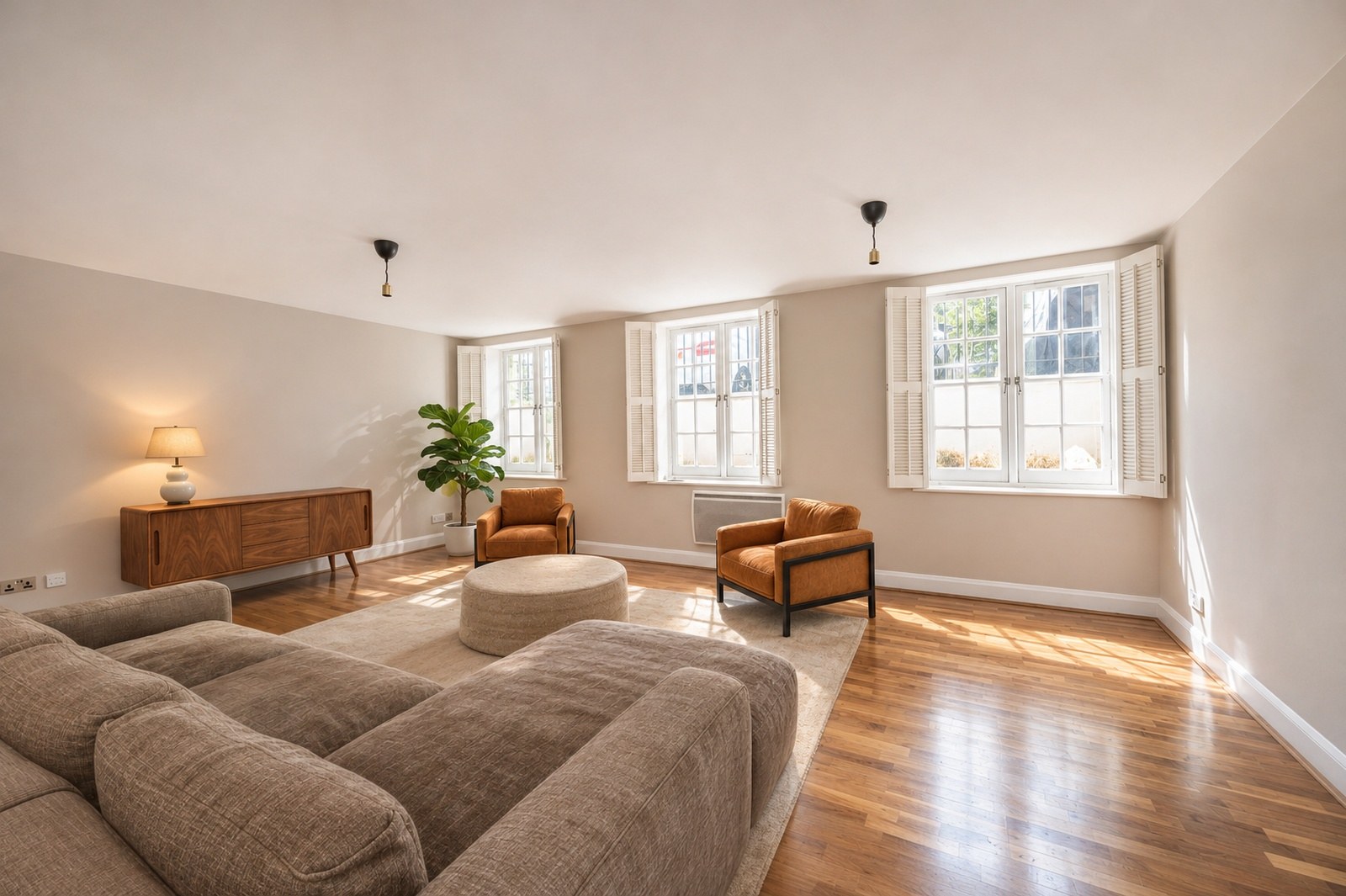
As a way to show buyers how an empty room can be used, not as a promise of a price or a date. We make Livium AI, which stages a room once from up to six ordinary photos and puts the same furniture in the same place in every one. Our guide to multi-angle virtual staging explains why that consistency matters, and you can start with 25 free credits.
Stage the room once.
Every photo matches.
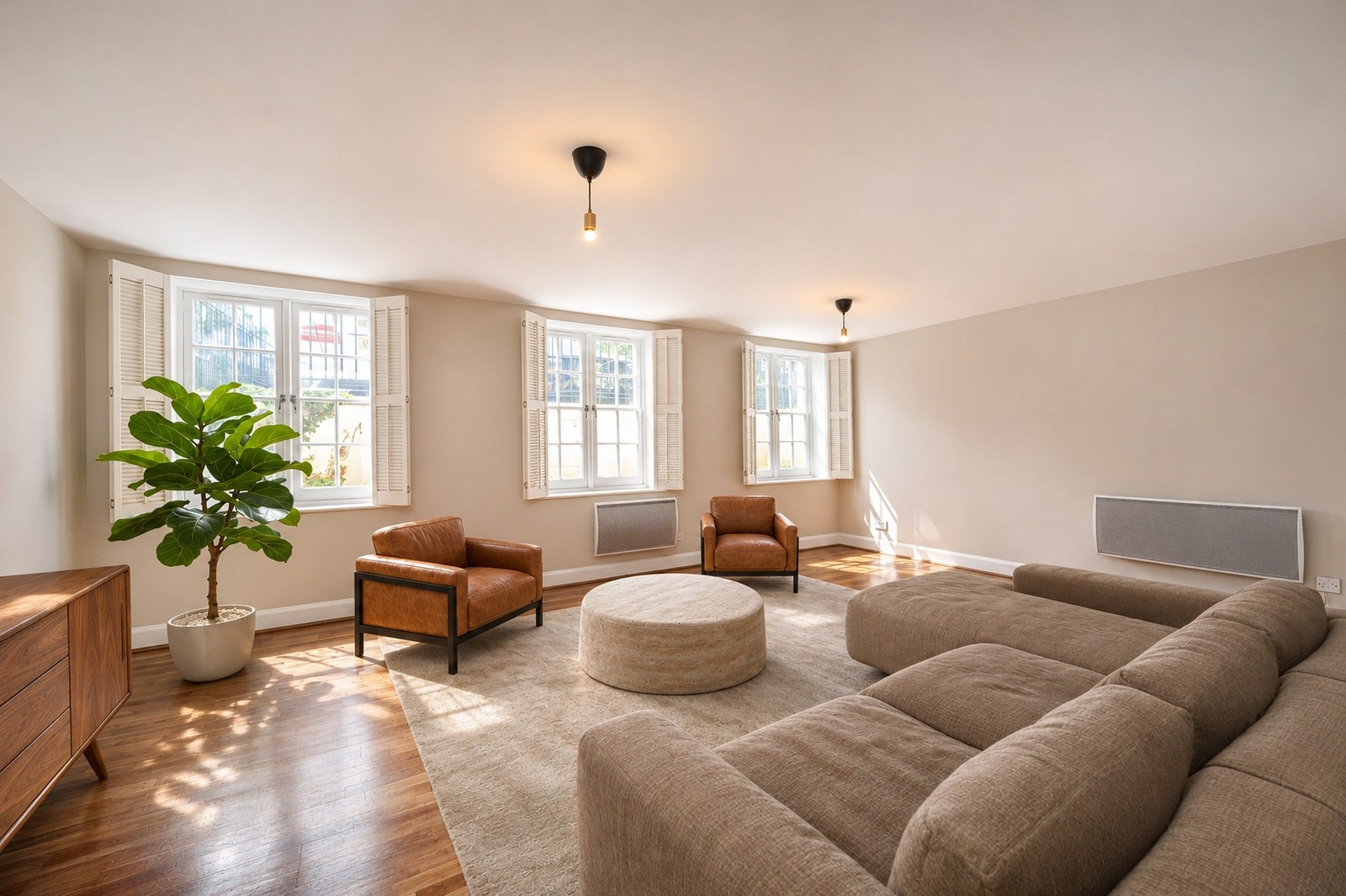
Upload a few photos of the empty room. Livium AI furnishes it once, in one 3D model with every piece at its real size, so every photo of the listing shows the same furniture in the same place.
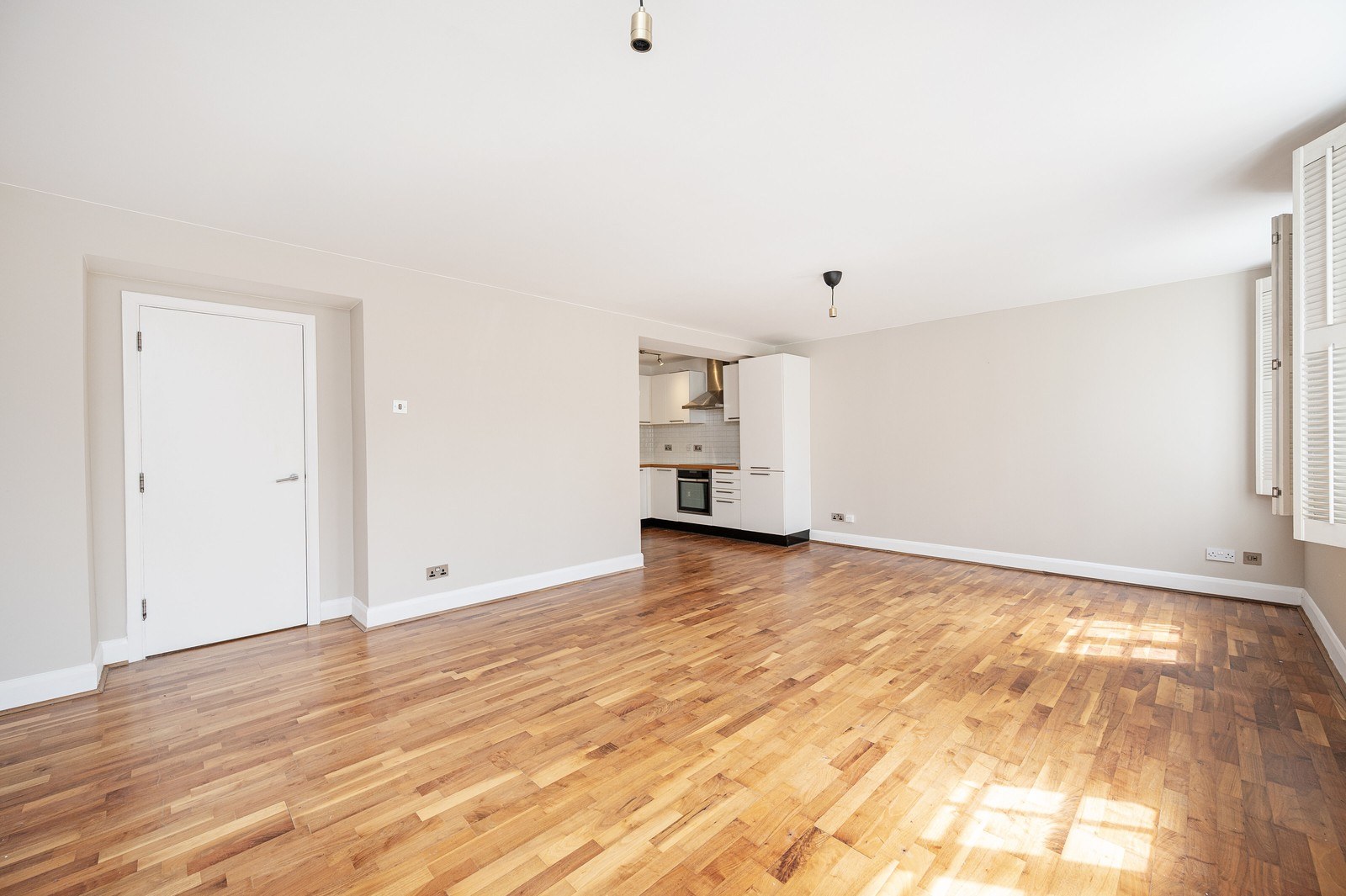
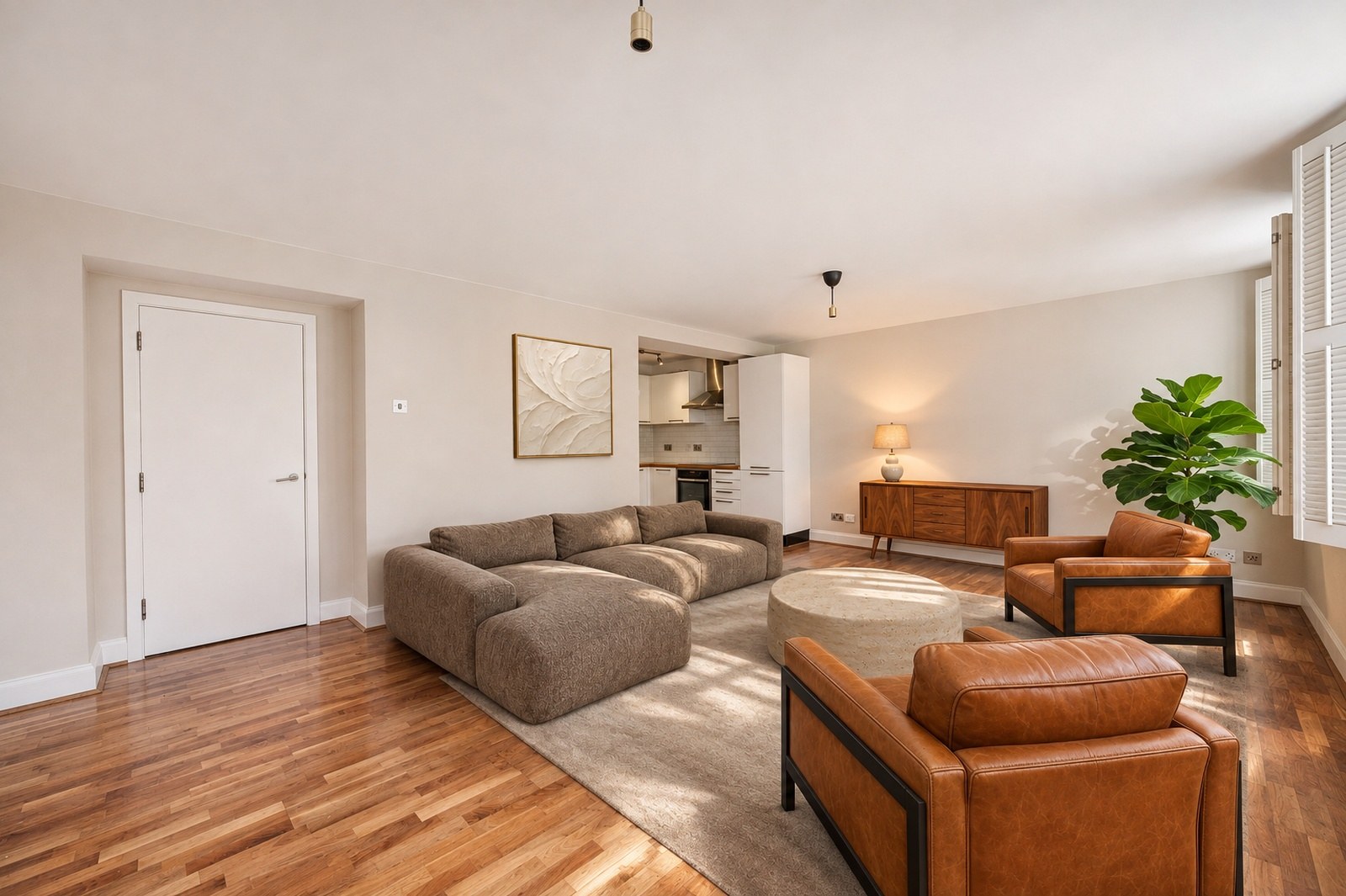 As photographedStaged by Livium AI
Sources
- NAR Report Reveals Home Staging Boosts Sale Prices and Reduces Time on Market (opens in a new tab), National Association of Realtors press release, 6 May 2025
- 2025 Profile of Home Staging (PDF) (opens in a new tab), National Association of Realtors Research Group, May 2025
- The Consumer's Guide to Real Estate Staging, including 2011 statistics (archived PDF) (opens in a new tab), Real Estate Staging Association, Internet Archive copy of 3 May 2012
- The Consumer's Guide to Real Estate Staging, including 2012 statistics (archived PDF) (opens in a new tab), Real Estate Staging Association, Internet Archive copy of 6 September 2013
- Home Staging Statistics and Quarterly Market Insights (opens in a new tab), Real Estate Staging Association, last checked 16 November 2026
- Home staging professionals find new business in changing market (opens in a new tab), HousingWire, 3 September 2013
- Want to Sell the Home Faster? Stage it First, Study Says (opens in a new tab), NAR Styled, Staged & Sold blog, 7 October 2013
- 8 eye-opening home-staging statistics for 2024 (opens in a new tab), Orchard, 30 May 2023
- Home Staging: Do Staged Homes Sell Faster? (opens in a new tab), RE/MAX Canada, 2 April 2025, updated 29 April 2026
- 50 Essential Home Staging Statistics for 2023 (opens in a new tab), Raleigh Realty, 22 March 2023
- Staging A Home Is Worth It Because Most Buyers Lack Imagination (opens in a new tab), Financial Samurai, 16 April 2025, updated 9 September 2025
- Virtual Staging ROI: Why AI Homes Sell 73% Faster in 2026 (opens in a new tab), Collov, 3 March 2026
- The Impact of Staging Conditions on Residential Real Estate Demand (opens in a new tab), Lane, Seiler and Seiler, Journal of Housing Research, 2015 (EconPapers record)
- Real Estate Pictures: The Role of Furniture Preferences in Subjective Valuation (opens in a new tab), Thaler and Koch, Journal of Housing Research, 2023
- Home staging has little impact on sale price: study (opens in a new tab), The Real Deal, 27 December 2013
- Staging increases the value of homes on the market and they sell faster (opens in a new tab), New Savanna, 12 April 2026 (citation and opening of Bhattacharya and others, SSRN working paper, 7 December 2025)
- Staged homes sell for more than empty homes (opens in a new tab), Marginal Revolution, 12 April 2026 (abstract of the same working paper)
- Hiring a Professional Photographer for Listing Photos Pays Off According to Latest Redfin Study (opens in a new tab), Redfin via PR Newswire, 3 December 2013
- Homes Listed with Professional Real Estate Photos Sell Quicker and For More Money. This Is Why. (opens in a new tab), Redfin, 3 June 2019
- How Professional Real Estate Photography Helps Homes Sell 32% Faster (opens in a new tab), Snappr, 4 August 2024
- How Professional Real Estate Photos Boost Sales and Speed (opens in a new tab), HomeJab, 15 September 2025
- 90+ Key Real Estate Photography Statistics and Trends for 2026 (opens in a new tab), PhotoUp, 14 February 2025
- Virtual Staging vs Real Staging: Which Is Better for Your Listing? (opens in a new tab), RoomFlip, 21 March 2026
- Most AI-altered listings go undisclosed, California law bans it (opens in a new tab), HousingWire, 24 June 2026
- Home Staging in Dubai: Does it Increase Sale Price? (opens in a new tab), West Gate Dubai, 7 June 2026
- 18 Helpful Home Staging Statistics From Our Survey of 900 Top Real Estate Agents (opens in a new tab), HomeLight, 28 June 2019
Keep reading
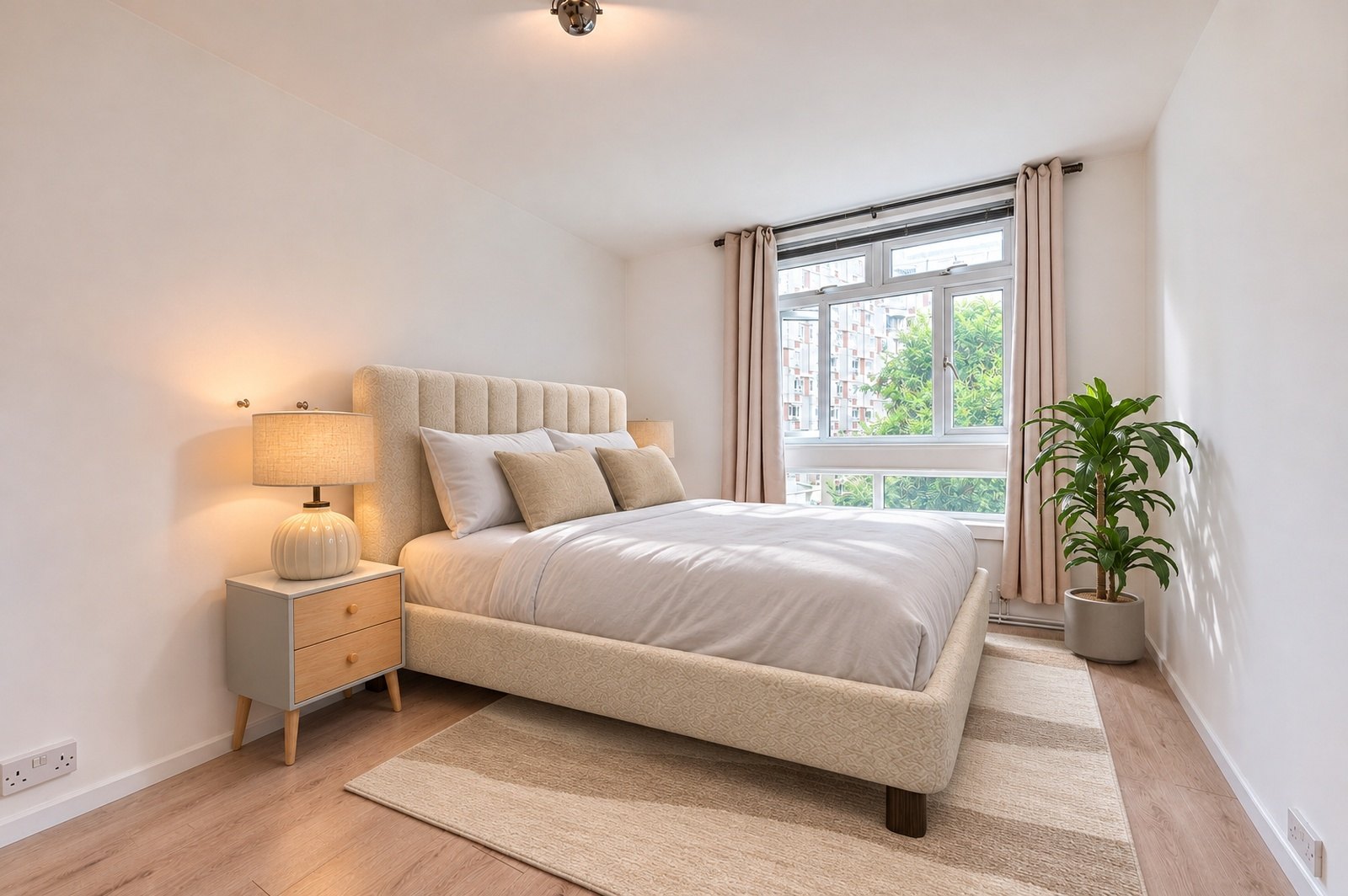
Is virtual staging worth it? An honest answer
Usually, for an empty room judged online, at a few dirhams a photo. No study we found measures its effect on price or speed. The evidence, costs and risks.
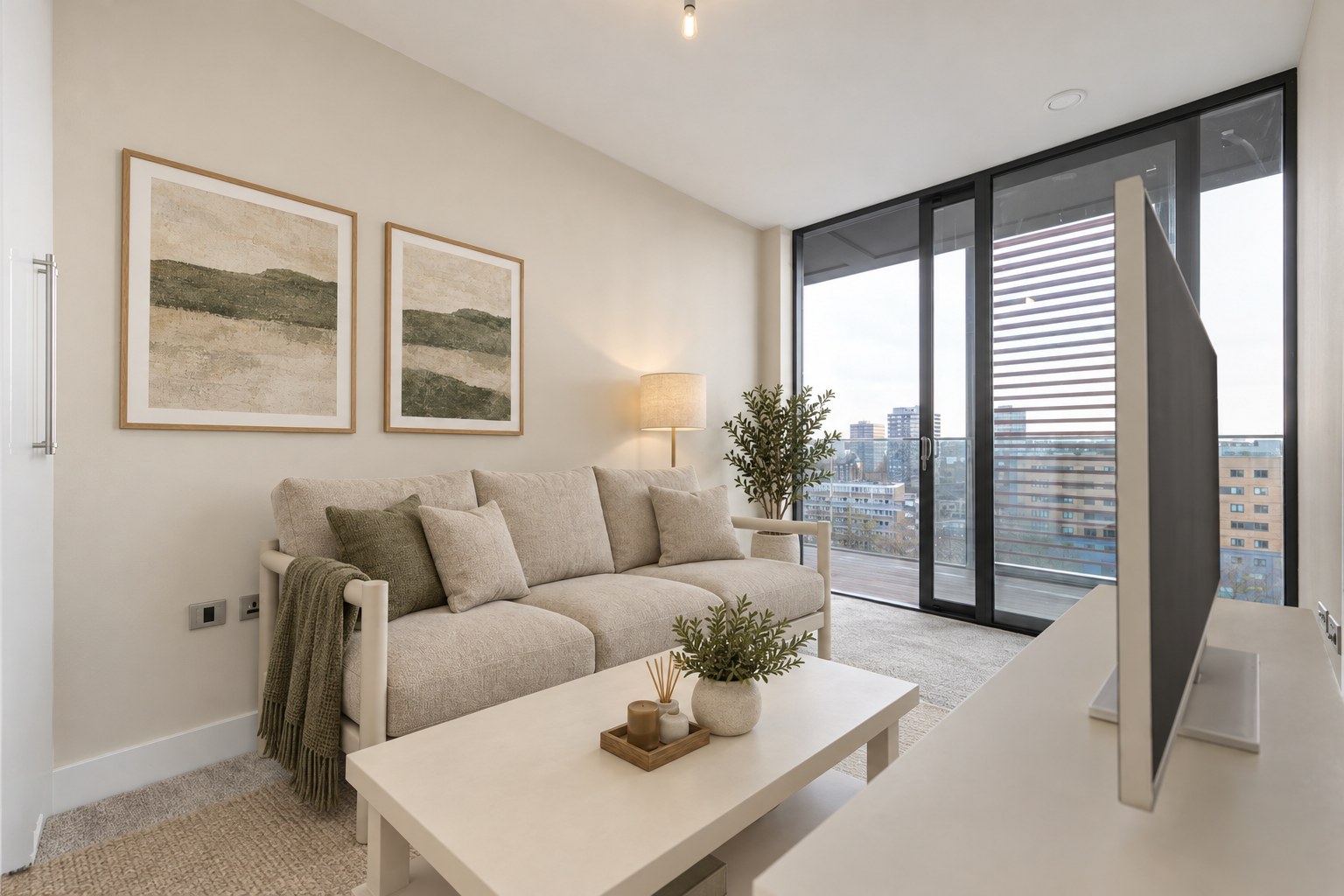
How to sell or let a vacant apartment in Dubai
Selling or letting an empty flat in Dubai: the permit and owner's form, preparing and photographing the unit, staging options, and a checklist for the week.
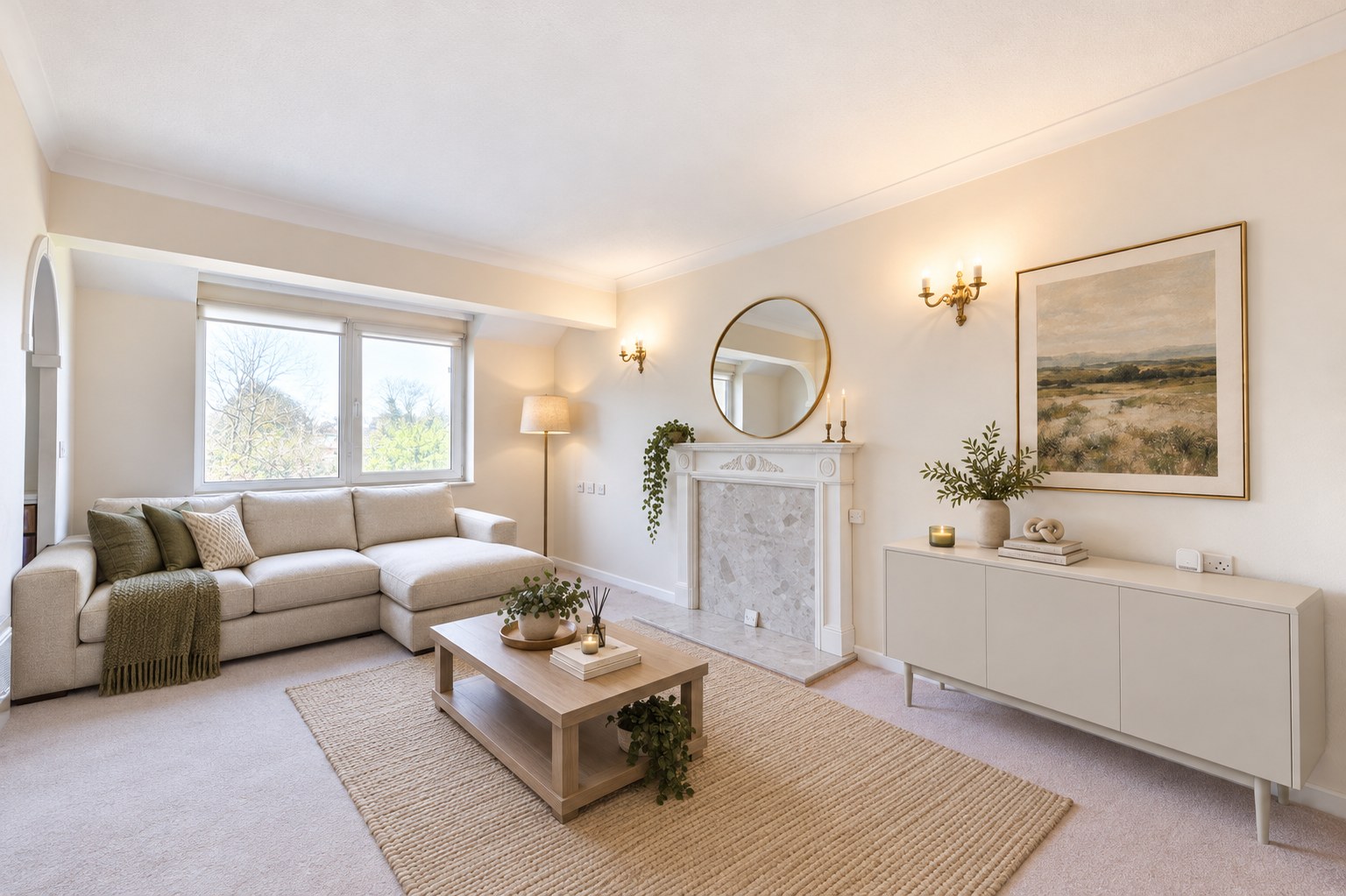
Virtual staging for photographers: adding it to your shoot
How property photographers can add virtual staging to a shoot: what changes on site, how to price it per room, what to deliver and who labels the photos.