Is virtual staging worth it? An honest answer
Usually, for an empty room judged online, at a few dirhams a photo. No study we found measures its effect on price or speed. The evidence, costs and risks.
On this page
In our view, usually yes, for an empty living room or bedroom that buyers or tenants will first see on a portal. Software costs under AED 10 a photo, against AED 5,000 to 10,000 to stage a one-bedroom with real furniture, and you can undo it by putting the originals back. But no study we found measures whether virtual staging itself sells or lets a property faster or for more, so ask for the source of any percentage you are quoted.
Key points
- We found no independent study of what virtual staging does to price or time to sell, and no staging data for Dubai or the UAE.
- In a 2025 National Association of Realtors survey, 29% of US sellers' agents said staging raised offers by 1% to 10%. That is opinion, about staging in general.
- Experiments published in 2015 and 2023 found furniture made no significant overall difference to people's valuations. A working paper on 15,777 US sales estimates furnished homes sold for about 10% more.
- Indicative prices, November 2026: AED 5,000 to 10,000 to stage a Dubai one-bedroom physically, AED 200 to 500 an image from a Dubai studio, about AED 1.47 to 9.80 a photo with software.
- In our view it is a poor fit for short lets, furnished lets, rooms with defects and rooms already furnished well.
Does virtual staging work?
We found no independent study of virtual staging itself. Staging in general has been studied, with mixed results. Our check of home staging statistics traces the famous figures to their sources.
| What "work" means | What has been measured |
|---|---|
| More viewings | Agents' opinions only |
| Sells sooner | Agents' opinions, and one working paper's estimate of a week |
| Sells for more | Two experiments found no significant overall difference. One working paper estimates about 10%. |
The opinions come from the NAR 2025 Profile of Home Staging, a survey of US agents by the National Association of Realtors. Its release of 6 May 2025 (opens in a new tab) reports 1,266 answers, a 2.5% response rate. Of sellers' agents, 29% said staging "led to a 1% to 10% increase in the dollar value offered" and 49% saw a shorter time on the market. Of buyers' agents, 31% said buyers were "more willing to walk through a home they saw online". As our statistics check reads the full report, 30% of sellers' agents saw no effect on offers and 34% were not sure.
In an experiment by Lane, Seiler and Seiler (2015) (opens in a new tab), valuations did "not significantly differ" with furniture and wall colour. In Thaler and Koch (2023) (opens in a new tab), the closest test to virtual staging we found, students valued the same empty apartment from photos with or without furniture, with no significant difference "on aggregate". Those who said they cared about furniture changed their estimates by about 11% when shown the other version.
A working paper by Puja Bhattacharya and colleagues, on listing photos from 15,777 US sales, estimates that "staged homes sell for roughly 10% more and one week faster than comparable homes without furniture" (abstract on Marginal Revolution (opens in a new tab), 12 April 2026). We found no journal version, and the abstract does not mention virtual staging. A virtually staged flat is still empty at the viewing, so that effect may not carry over.
What does virtual staging cost compared with physical staging?
Far less. We sell one of the options. Indicative figures, checked on 16 November 2026, for six photos: three angles each of a one-bedroom's living room and bedroom.
| Option | Six photos of a one-bedroom | Source |
|---|---|---|
| Physical staging for two to three months | AED 5,000 to 10,000 | Real Estate Club Dubai, June 2026 |
| A studio at AED 200 to 500 an image | AED 1,200 to 3,000 | Real Estate Club Dubai, June 2026 |
| Software, sold as a monthly plan | About AED 73, a month of our smaller plan | Livium AI, November 2026 |
The first two rows come from Real Estate Club Dubai's staging directory (opens in a new tab) (updated June 2026), which charges businesses to be listed. Virtual Staging AI (opens in a new tab) lists $16 a month for six photos and $39 for 60, billed yearly: about AED 9.80 and AED 2.40 a photo. At the time of writing our plans are $19.99 a month for 40 staged photos (about AED 1.84 each) and $39.99 for 100 (about AED 1.47 each). What home staging costs in Dubai goes into each option.
When is virtual staging worth it, and when is it not?
When the room is empty, buyers meet it first as a photo, and nothing is being hidden. The verdicts are our view.
| The listing | Our view | Why |
|---|---|---|
| Vacant apartment for sale or unfurnished let | Usually worth it | Buyers see the photos before they book, and an empty room shows little of how to use it. |
| New-build unit at handover | Usually worth it | It is empty, and Property Finder's Verified badge refuses developer images. Keep the originals in. |
| Vacant villa with viewings every day | Physical staging is the better buy | Buyers judge it in the rooms, where virtual furniture is not. |
| Luxury home | Physical staging first | The viewing closes the sale, and the cost is small against the price. |
| Tenanted unit with dated furniture | Only with a clear label | Viewings will show the tenant's things. Say the photos were digitally cleared and staged. |
| A room with a real defect | Not for that room | Staging must not hide damp, cracks or damage. |
| Short let or furnished let | No | The furniture comes with the stay. Photograph it. |
| A room already furnished well | No | It adds a cost and a label for nothing. |
David Vaughan of Aston Vaughan, a Sussex agency that uses AI staging, gave the first row's reason to BBC News (opens in a new tab) (7 November 2026): "buyers have told us empty rooms are hard to read for scale".
What are the risks of virtual staging?
Three, each with a cheap prevention.
A photo that shows a different property
A staged photo must show the same building as its original: the same windows, floor and view, and a room that looks its real size. Livium AI is designed to keep the room as photographed, and every piece it adds is a 3D model at its real size. Look over every staged photo against its original before it goes live, using our list of common virtual staging mistakes.
A viewer who feels misled
A renter in Brighton told BBC News (opens in a new tab) that only two of the dozen properties she viewed had the furnishings seen on Rightmove and called it "false advertisement". Veronique Perrin, a New York agent who never uses virtual staging and runs a separate staging business, told HousingWire (opens in a new tab) (16 April 2026) that buyers "resent it and respond very negatively when they feel they were deceived about what is offered". These are reported cases, not measurements. Label every staged photo, put its original next to it, and say when you book a viewing that the rooms are empty.
A complaint to a portal or the regulator
RERA, the Dubai Land Department's Real Estate Regulatory Agency, makes the advertising company "responsible for the validity and credibility of the advertisement content" (Circular 2-2022 (opens in a new tab), 20 July 2022) and says "Violations will be issued" to companies that do not comply. It does not mention photographs.
Property Finder's Verified checklist (opens in a new tab) (undated) wants "genuine images of the property" and will not approve CGIs (computer-generated images). We found no portal rule that allows, bans or requires a label on virtually staged photos, and nothing on whether a staged photo counts as a CGI: our article on Property Finder and Bayut photo requirements has the detail. Where a place has written disclosure rules, follow them.
How can you tell whether virtual staging worked on your listing?
Compare the portal's figures for the listing before and after you add the staged photos, with nothing else changed. It is weak evidence, but better than a vendor's percentage: it is your listing, measured in a way you know.
Bayut says Profolio, its app for agents, shows for each listing "the number of impressions, clicks, and leads it has received" (Bayut, 5 November 2024 (opens in a new tab)). An impression is an appearance in search results.
- Before. Run the listing for two weeks with the as-photographed photos. Note impressions, clicks and leads.
- Swap. Add the staged photos, labelled, with the originals still in. Keep the price, title, description and paid placement unchanged, and edit the live listing rather than taking it down: Property Finder's Verified checklist says a listing loses its badge if it is unpublished or its price moves by 10% or more.
- After. Note the same figures for the next two weeks.
- Compare clicks divided by impressions first. In our view the cover photo has most to do with that rate. Leads are usually too few to compare.
One listing proves little: demand and the portal's ranking move from week to week, and a cheaper flat can come up in the same building. Bayut's Competitive Insights, which Bayut says compares your listings with similar ones nearby, gives a rough check on the whole market. Repeat the test on several listings before you trust a pattern.
Virtual staging pros and cons
| For | Against |
|---|---|
| Under AED 10 a photo with software | Does nothing at the viewing |
| Minutes, with nothing to deliver or collect | Buyers can feel misled by an unlabelled photo |
| Shows how an empty room can be used | Each staged photo needs a label and its original beside it |
| Easy to undo: put the originals back | No measured effect on price or speed |
Common questions
Is physical staging better?
For some listings, yes: it is the only kind that works at the viewing. In NAR's survey, 43% of US sellers' agents said physical staging was "much more or more important" to their clients (88% said so of photos). We think it is worth the money where viewings decide the sale.
Which rooms are worth staging?
The living room and the main bedroom. NAR's buyers' agents said staging the living room mattered most to buyers (37%), then the primary bedroom (34%) and the kitchen (23%), with the guest bedroom last (7%). We would leave kitchens and bathrooms as photographed: their fittings are part of what is for sale.
Does it matter which tool you use?
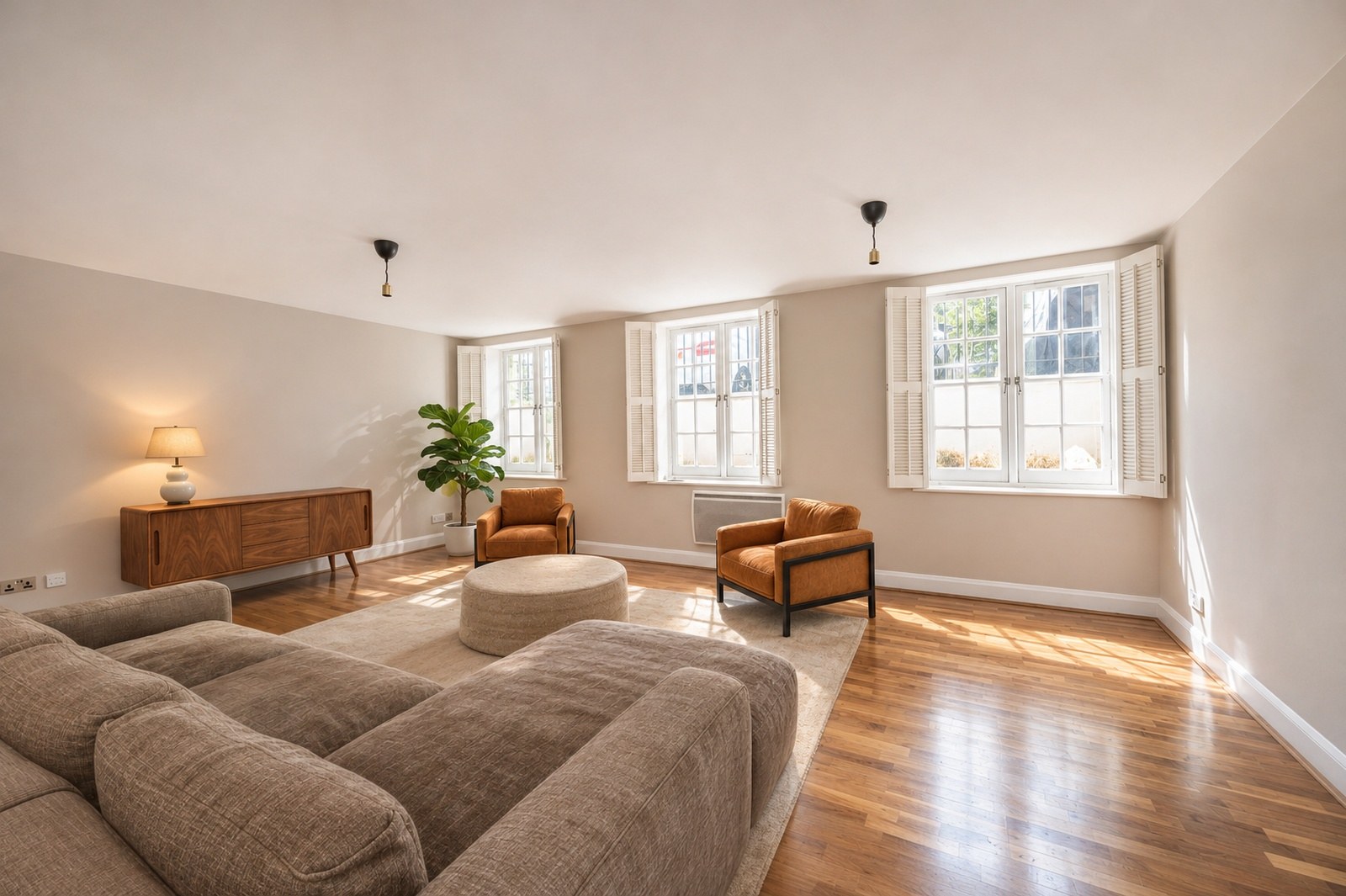
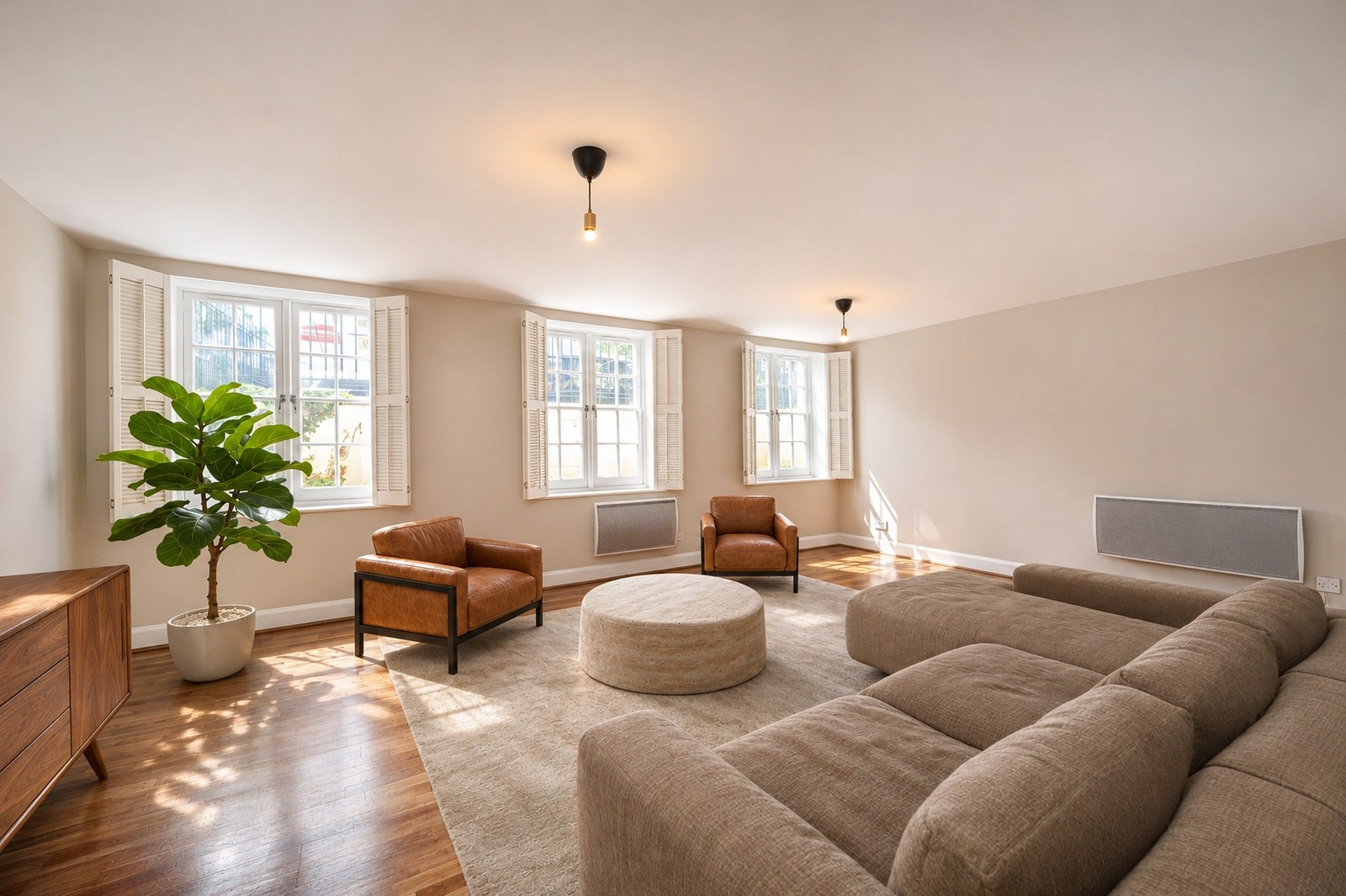
Yes. A tool that redraws each photo on its own can give one room a different sofa in each photo. One that places the furniture once in a 3D model of the room keeps the same pieces in the same places in every photo, which is what a buyer flicking between them expects. Our explainer on virtual staging compares the methods.
Trying it on your own listing
We make Livium AI. Upload up to six ordinary photos of a living room or bedroom and it stages them with the same furniture in the same place in every photo, usually in minutes, and each staged photo can carry a "Virtually staged" label. Anyone new with a confirmed email address gets 25 free credits, enough for a room of up to five photos, watermarked and with no card: start free and judge it on your own photos.
Stage the room once.
Every photo matches.
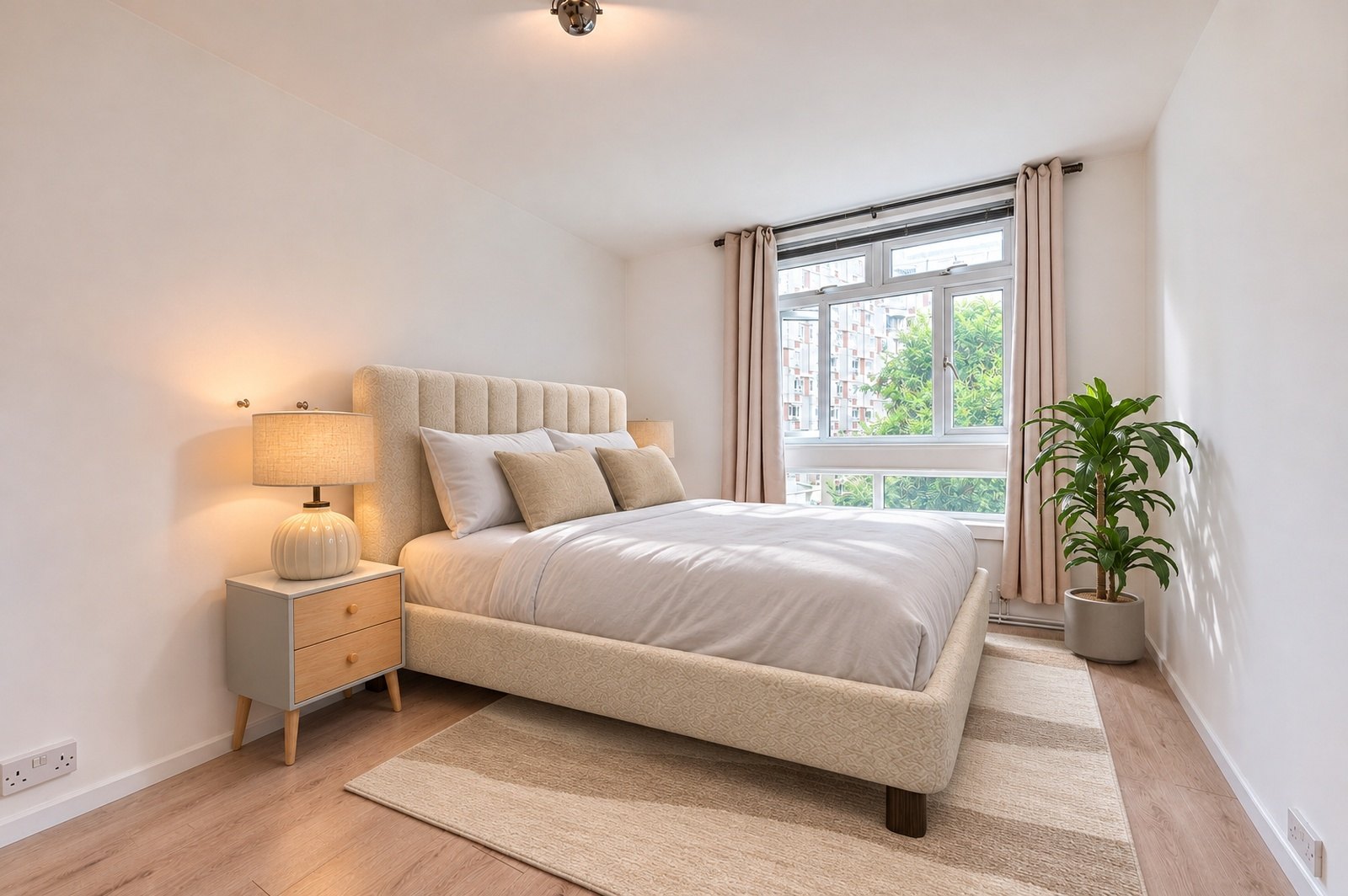
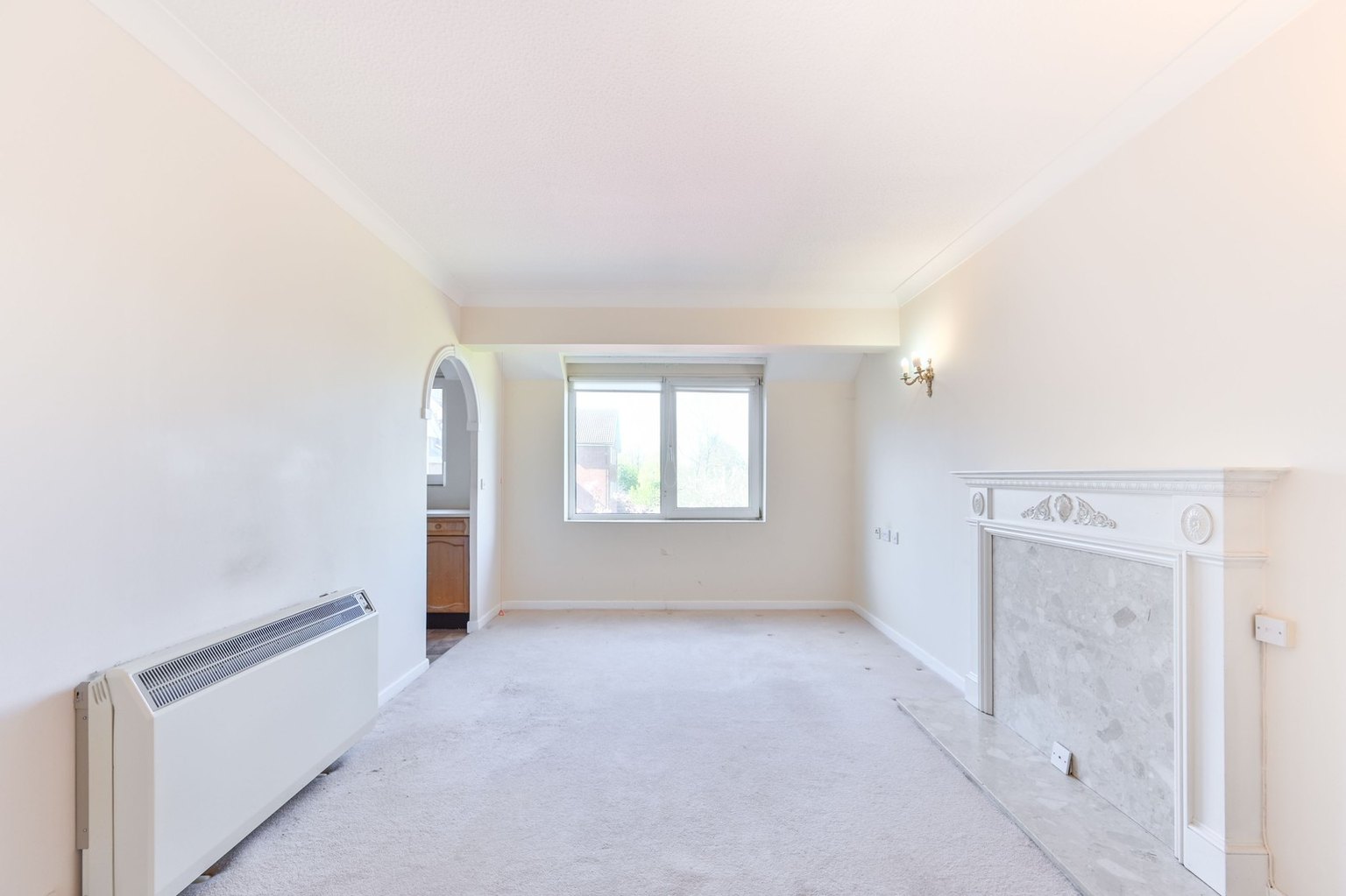
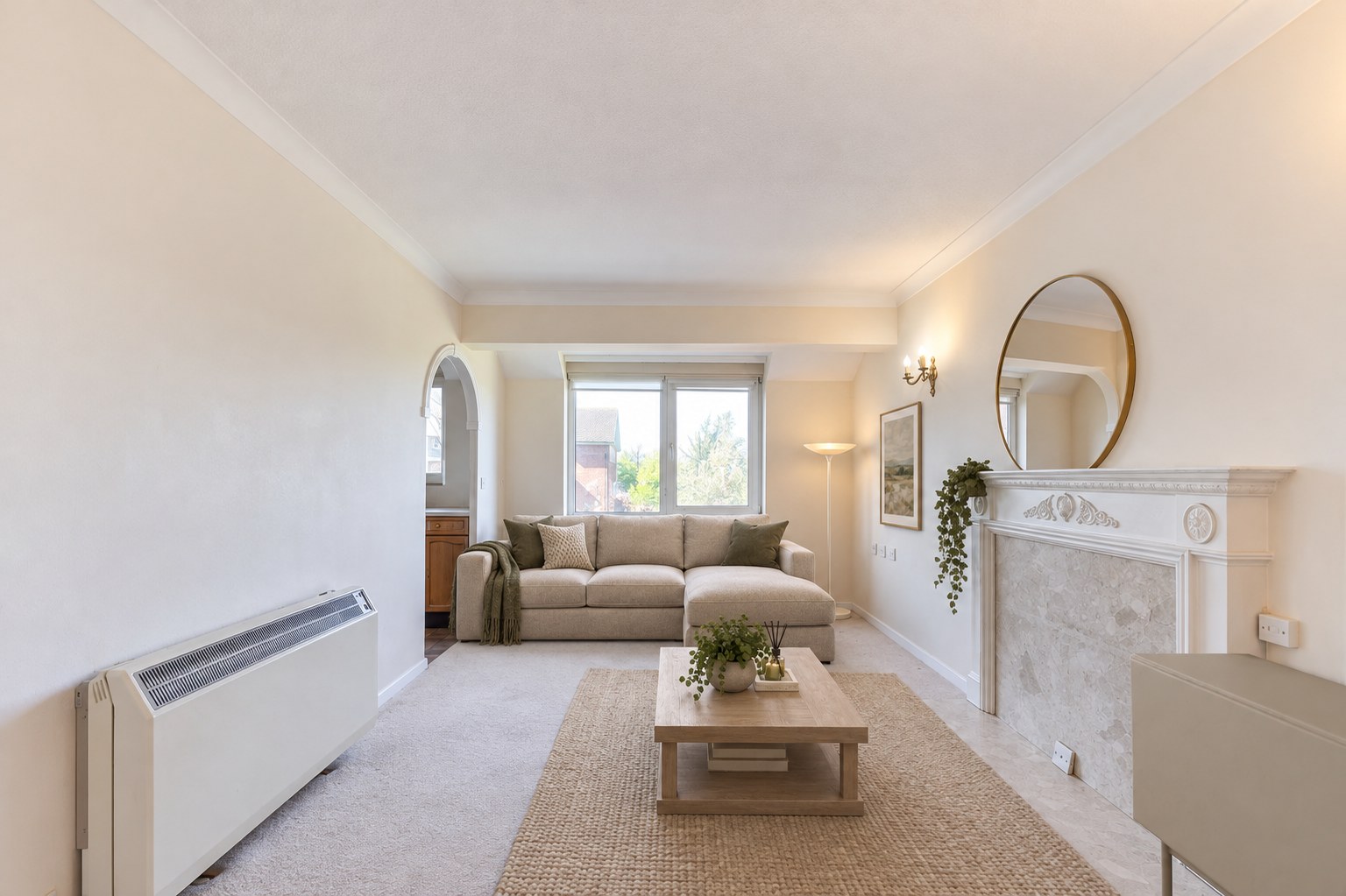
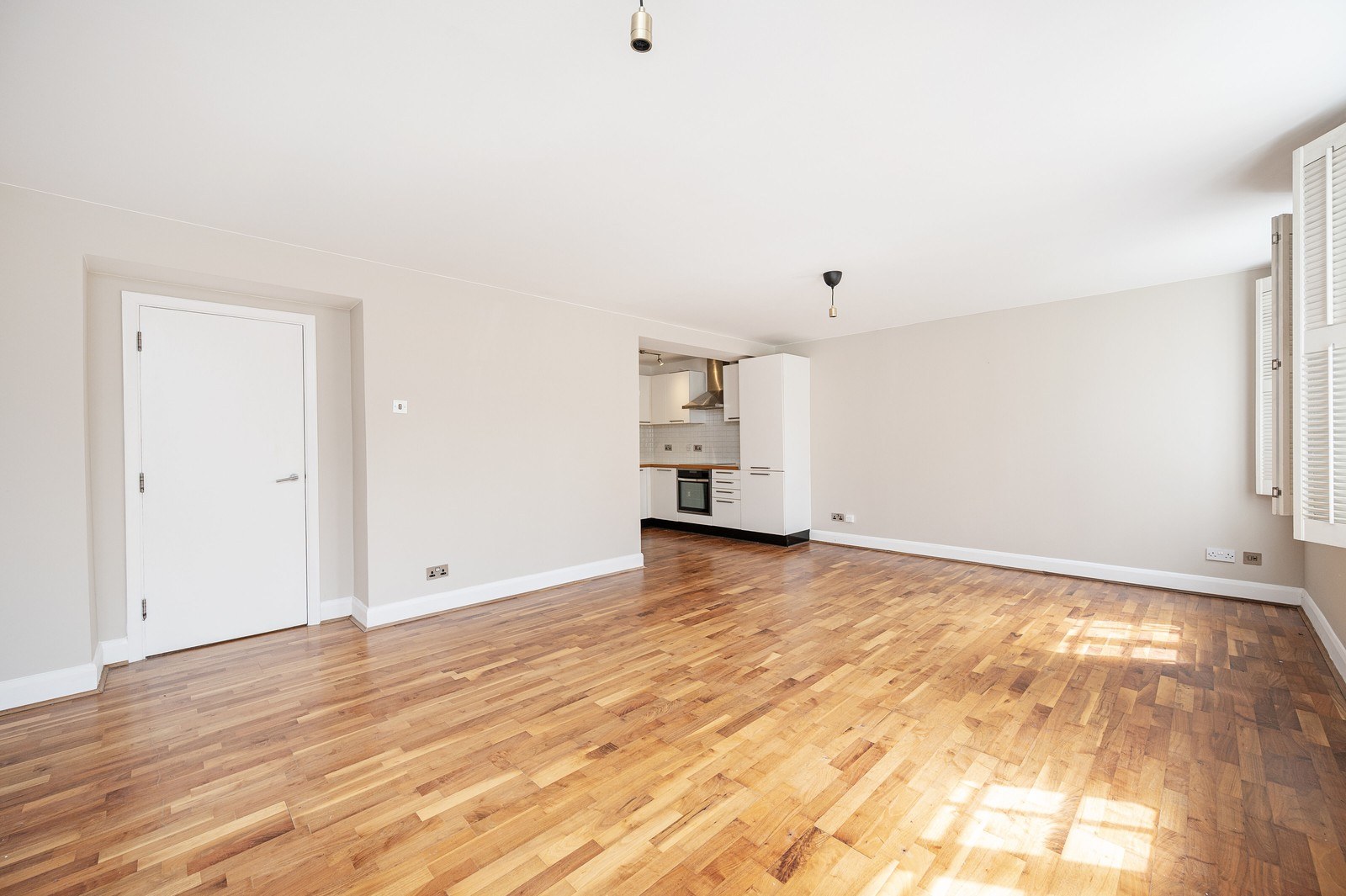
Upload a few photos of the empty room. Livium AI furnishes it once, in one 3D model with every piece at its real size, so every photo of the listing shows the same furniture in the same place.
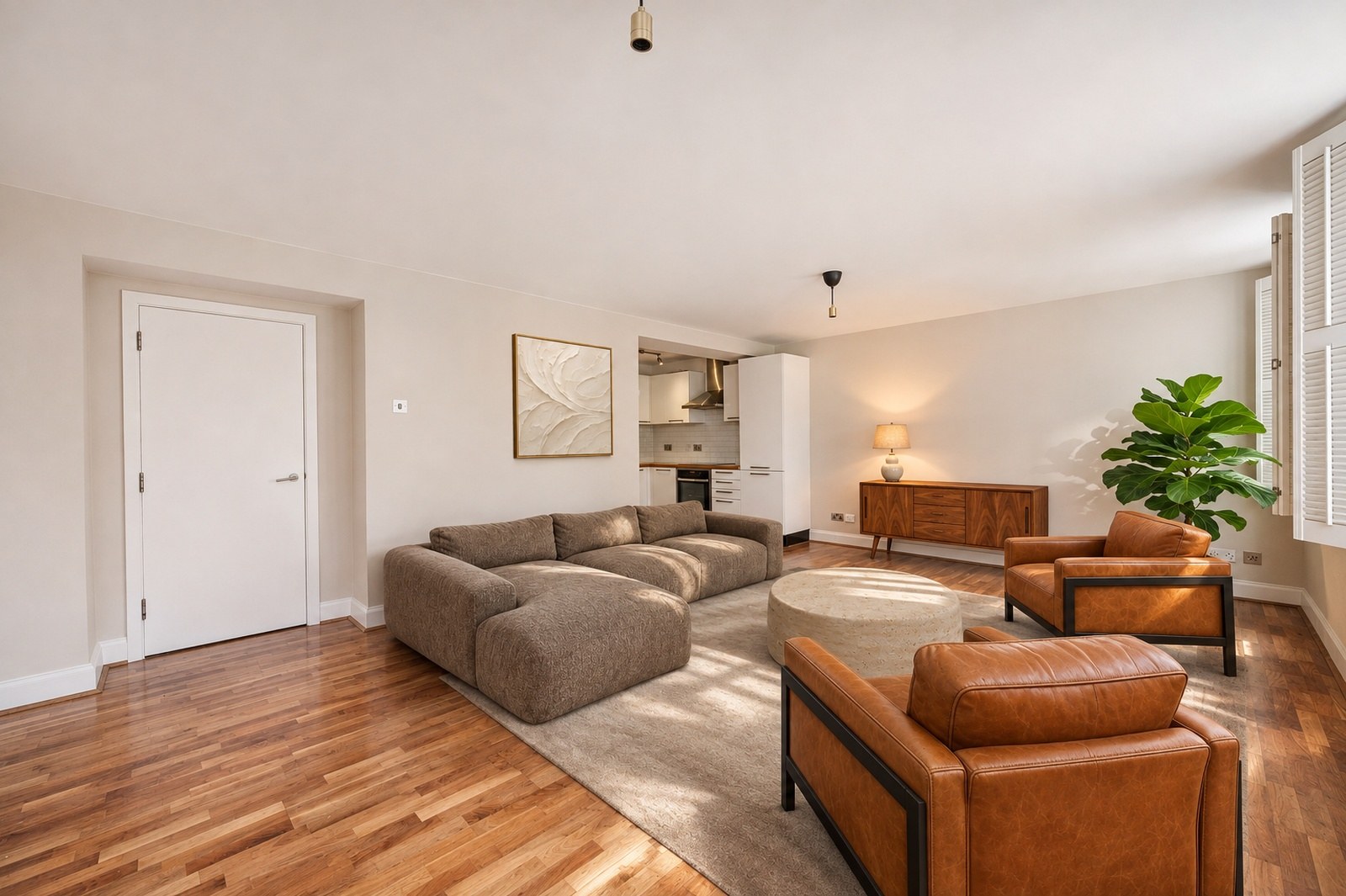 As photographedStaged by Livium AI
Sources
- NAR Report Reveals Home Staging Boosts Sale Prices and Reduces Time on Market (opens in a new tab), National Association of Realtors, 6 May 2025
- The Impact of Staging Conditions on Residential Real Estate Demand (opens in a new tab), Lane, Seiler and Seiler, Journal of Housing Research, 2015
- Real Estate Pictures: The Role of Furniture Preferences in Subjective Valuation (opens in a new tab), Thaler and Koch, Journal of Housing Research, 2023
- Staged homes sell for more than empty homes (opens in a new tab), Marginal Revolution, 12 April 2026 (abstract of Bhattacharya and others, SSRN working paper)
- Furniture and Home Staging directory (opens in a new tab), Real Estate Club Dubai, updated June 2026
- Pricing (opens in a new tab), Virtual Staging AI, checked 16 November 2026
- AI in property listings is false advertising, house-hunters say (opens in a new tab), BBC News, 7 November 2026
- When listings lie: AI staging pushes real estate into an ethics gray zone (opens in a new tab), HousingWire, 16 April 2026
- Circular 2-2022: Real Estate ads terms and conditions (opens in a new tab), Real Estate Regulatory Agency, Dubai Land Department, 20 July 2022
- Verified listing: fact sheet and checklist (opens in a new tab), Property Finder, PDF, undated
- The Best Of Profolio: Top Features For UAE Real Estate Agents (opens in a new tab), Bayut Agent Portal, 5 November 2024
All links last checked 16 November 2026.
Keep reading
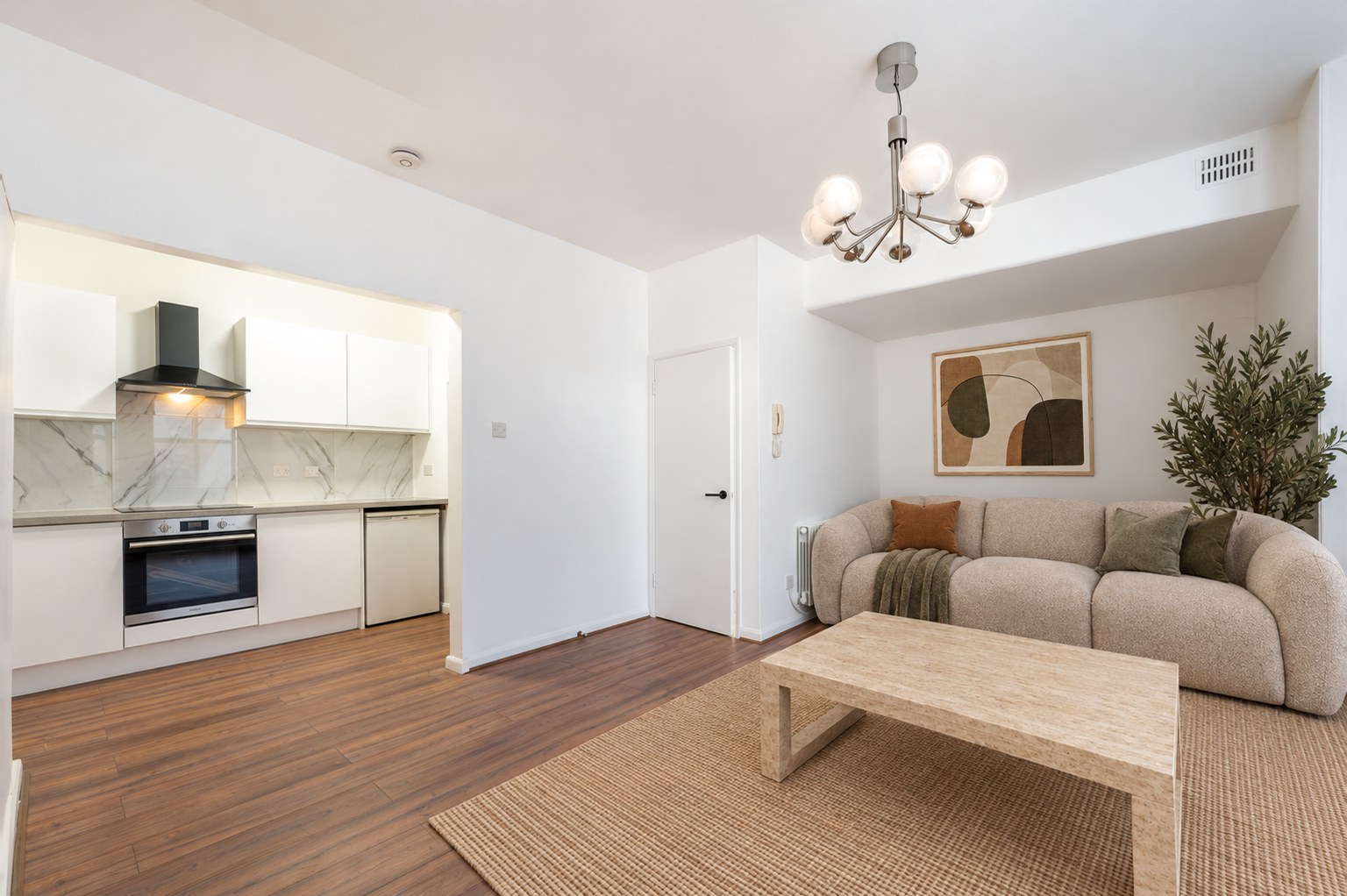
Home staging statistics, checked against their sources
Most home staging statistics lead to no study, or to US data from 2011 to 2013. We traced each one and set out what the NAR survey and the research found.
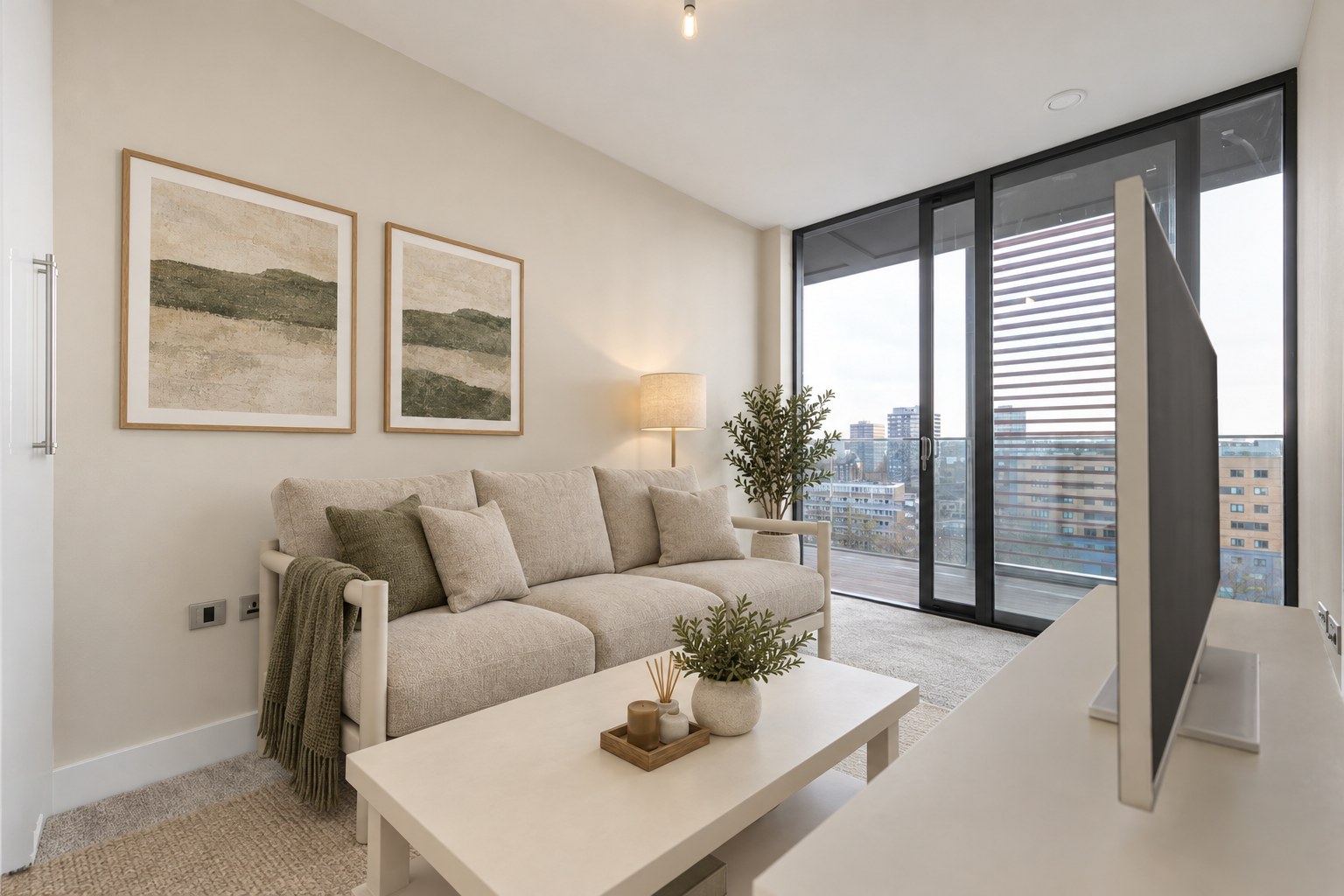
How to sell or let a vacant apartment in Dubai
Selling or letting an empty flat in Dubai: the permit and owner's form, preparing and photographing the unit, staging options, and a checklist for the week.
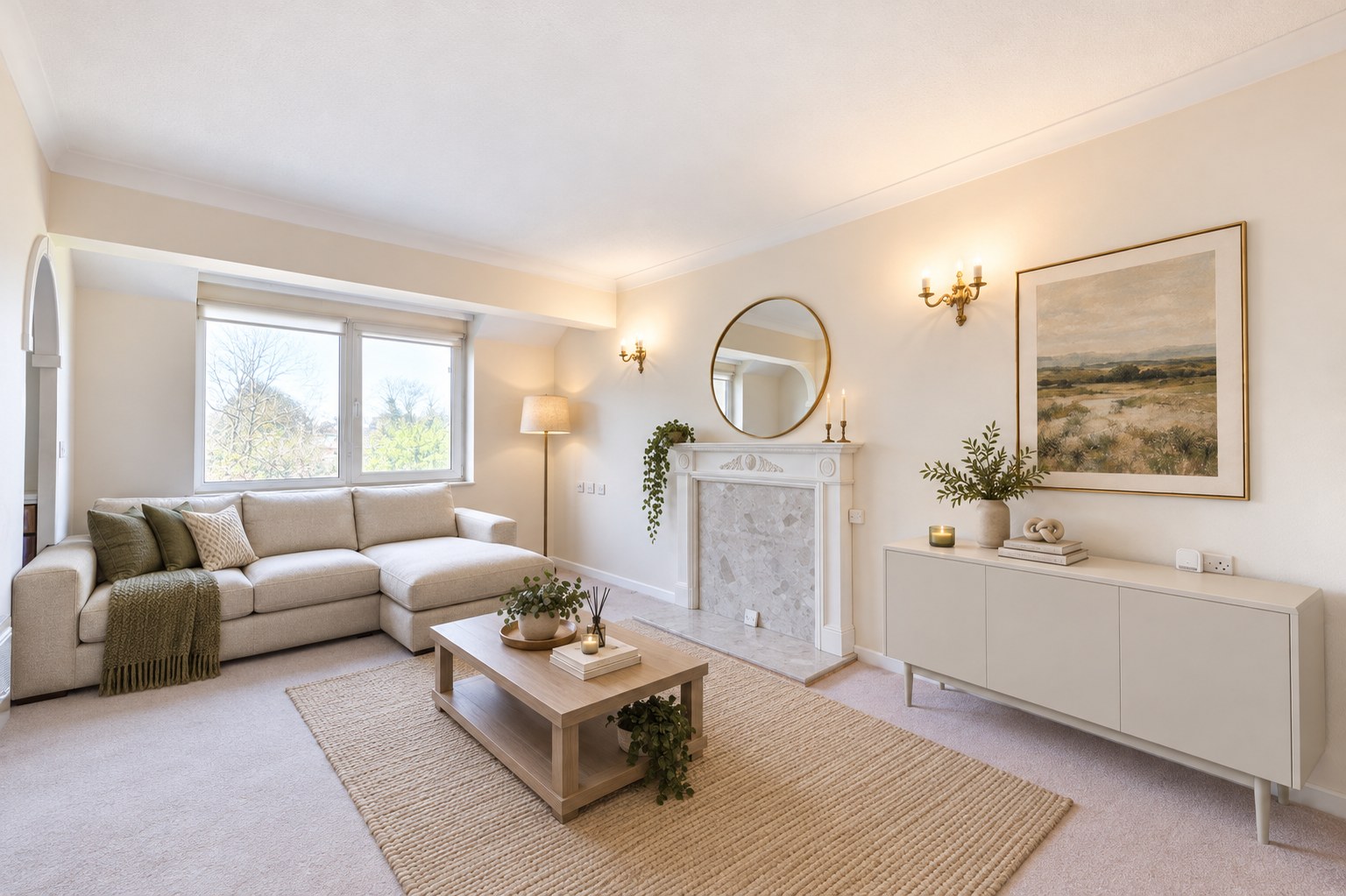
Virtual staging for photographers: adding it to your shoot
How property photographers can add virtual staging to a shoot: what changes on site, how to price it per room, what to deliver and who labels the photos.